
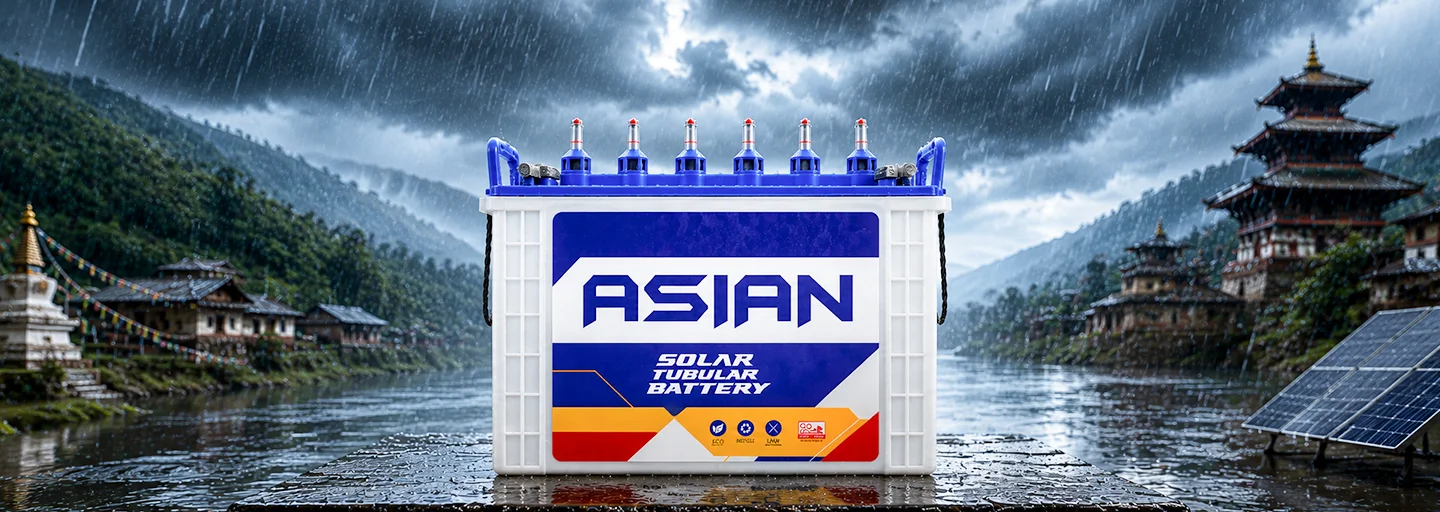
Solar Battery Care During Nepal’s Monsoon Season: Humidity, Flooding, and What to Do
- Battery Care |
- Asian Batteries |
- 25 May, 2026 |
- 92 views |
- 0 comments
Monsoon is important to Nepal, as it delivers more than 60 to 90 % of annual rain between June and september. While the monsoon benefits agricultural sectors, the season brings challenges in solar battery care. The high humidity in the air, exposure of the battery to the water due to floods, and poor ventilation contribute […]
Table of Content
- Why Monsoon Weather Is Challenging for Solar Batteries
- How High Humidity Affects Battery Terminals and Casing
- Risk of Flooding: How to Position and Protect Your Battery
- Positioning Battery
- Ventilation Requirements During the Monsoon Season
- Checking and Topping Up Distilled Water in Flooded Batteries
- What to Do If a Battery Gets Water-Damaged
- Warning Signs Your Solar Battery Needs Attention During Monsoon
- Pre-monsoon and post-monsoon battery inspection checklist
- Pre-Monsoon Checklist
- Post-Monsoon Checklist
- Conclusion
Monsoon is important to Nepal, as it delivers more than 60 to 90 % of annual rain between June and september. While the monsoon benefits agricultural sectors, the season brings challenges in solar battery care. The high humidity in the air, exposure of the battery to the water due to floods, and poor ventilation contribute to quick degradation and damage of the batteries. Home, business, and rural areas relying on solar energy or solar batteries face difficulties due to early damage of batteries or because of unexpected failure.
But following proper solar battery maintenance tips and taking battery-protective measures during monsoon season can increase the battery life and durability and get reliable backup power. In this blog, we explain why monsoon weather is challenging for solar batteries in Nepal. The risk of high humidity and flooding on the battery during the monsoon and ways to manage these issues for reliable and longer battery backup are also provided.
Why Monsoon Weather Is Challenging for Solar Batteries
Monsoon weather is challenging for solar batteries due to various reasons, including
- Moisture Level: The air in the monsoon season in Nepal is composed of a high moisture level that settles on battery surfaces, terminals, or electrical systems. This increases the chance of electrical leakage and corrosion, which gradually damages your solar battery system.
- Severe Undercharging: Due to frequent rain and clouds, your solar panels charge the battery less, generating low electricity. This impacts the battery’s charging ability and weakens the battery life as a result of continuous undercharging.
- High Humidity: Monsoon also challenges the solar battery systems due to the high humidity level. The high level of humidity increases electrical resistance and impacts the insulation of the battery.
- Flood and water exposure: Floods are a common issue in most areas of Nepal in monsoon due to rising water levels in major rivers. When flood water enters the solar battery setup, it damages electrical connections, leads to a short circuit, and damages the battery.
- Poor ventilation: Poor ventilation, especially during high moisture and humidity seasons like monsoon in Nepal, causes risk to the battery. The damp environment increases the risk of corrosion while reducing battery efficiency.
How High Humidity Affects Battery Terminals and Casing
High humidity level affects the battery terminal and casing due to various factors and effects such as
- Increased level of corrosion in battery terminal
- Oxidation formation on the metal surface that creates resistance in the efficiency of charging and discharging.
- Effects the battery casing and external components
- Increasing the chance of current leakage and damage to connection
- Weaken the insulation and protective materials of the battery.
To prevent your solar battery from high-humidity damage during monsoon, it is important to keep the battery area clean and well-ventilated. Inspecting battery terminals, cleaning corrosion, protective greasing, and routine maintenance are important for better battery performance.
Risk of Flooding: How to Position and Protect Your Battery
Floods are a major issue during monsoons in Nepal that damages battery systems placed at low elevations. As water enters the home or battery setup location, it increases the risk of battery damage due to water accumulation and short circuits.
Positioning Battery
Positioning the battery in the proper elevated location is important to protect the battery from water exposure during a flood. Installing a battery in the floor should be avoided, especially in areas where water seepage or flood risks are high. Also, the battery room should have proper drainage or water seals to prevent water from entering.
Ventilation Requirements During the Monsoon Season
The proper ventilation system is important to reduce the risk of moisture and high humidity in the battery room. Batteries like lead-acid generate gases when charging, and without proper ventilation, these gases also create health and safety risks. When rooms are well ventilated, the moisture, humidity level, and risk of corrosion decrease. Proper ventilation can be maintained during monsoon by:
- Keeping vents clear and unobstructed so that air can circulate.
- Use of exhaust fans where natural airflow is limited
- Ensure the vents don’t allow rainwater to enter in the battery room
Checking and Topping Up Distilled Water in Flooded Batteries
Solar batteries with flooded lead-acid technology help to know about the level of electrolytes in the battery. Checking the electrolyte level is important as the battery electrolyte level naturally decreases due to regular charge cycles. And during the monsoon, battery owners must check this level along with other battery prevention tips. The process of topping up distilled water in flooded lead-acid batteries includes the following:
- Disconnecting battery from charging systems
- Opening battery vents with caution
- Checking the electrolyte level in battery compartment
- Adding distilled water to required level
- Place the vent cap properly.
What to Do If a Battery Gets Water-Damaged
If your solar batteries get water-damaged despite your effort in preventing water exposure, the first step you must take is to disconnect the battery from its system. Avoid touching wet electrical components to prevent electrical hazards. If it is the same, remove water around the battery area and dry the battery exterior. Inspect battery terminals for corrosion and check connector cables for any damage.
Following the procedure, check for the battery performance. If there is a presence of water inside the battery, we recommend you take a professional assessment, as a water-damaged battery might cause a safety risk.
Warning Signs Your Solar Battery Needs Attention During Monsoon
Monitoring your solar battery regularly during monsoon season helps to identify issues in the battery early. Some of the warning signs you must check in your battery during monsoon season include the following:
- Presence of corrosion in the battery terminals
- Lower battery backup
- Slow charging rate
- Moisture in the battery bank
- Swollen and damaged battery case
- Faulty smell or odour coming from battery
- High heat level when charging the battery
Pre-monsoon and post-monsoon battery inspection checklist
To ensure your solar battery is safe and protected from high levels of humidity and moisture during the monsoon, we provide the battery inspection checklist you can follow to analyze your battery condition. The pre-monsoon and post-monsoon battery inspection checklists are provided below:
Pre-Monsoon Checklist
- Inspection for visible corrosion and loose connection
- Checking the electrolyte levels
- Checking battery charging performance and voltage
- Inspection and management of ventilation system in battery room
- Checking battery connection cables or wires
Post-Monsoon Checklist
- Check batteries for watermarks or damages
- Check and remove corrosion buildup in the battery.
- Inspection of battery case or body for cracks, damages, or swelling
- Checking battery capacity and backup
- Battery servicing if required
- Checking for electrical cables and connections.
Conclusion
The high humidity, moisture, increased chance of water exposure, and risk of heavy floods are major challenges for maintaining battery condition during monsoons in Nepal. But with proper inspection, regular battery maintenance, ventilation, and placement in a proper place, you can manage the battery effectively. Proper care and inspection of the battery during the monsoon not only increases battery life but also gives reliable performance and a low chance of damage due to water.
If you are planning to get a reliable battery for solar systems to last and perform most during the monsoon, contact Asian Batteries. Asian Batteries offers a wide variety of batteries for your solar system that ensure reliable and maximum performance during seasons like monsoon when humidity and moisture are high.
More Related Blogs
13 October, 2026
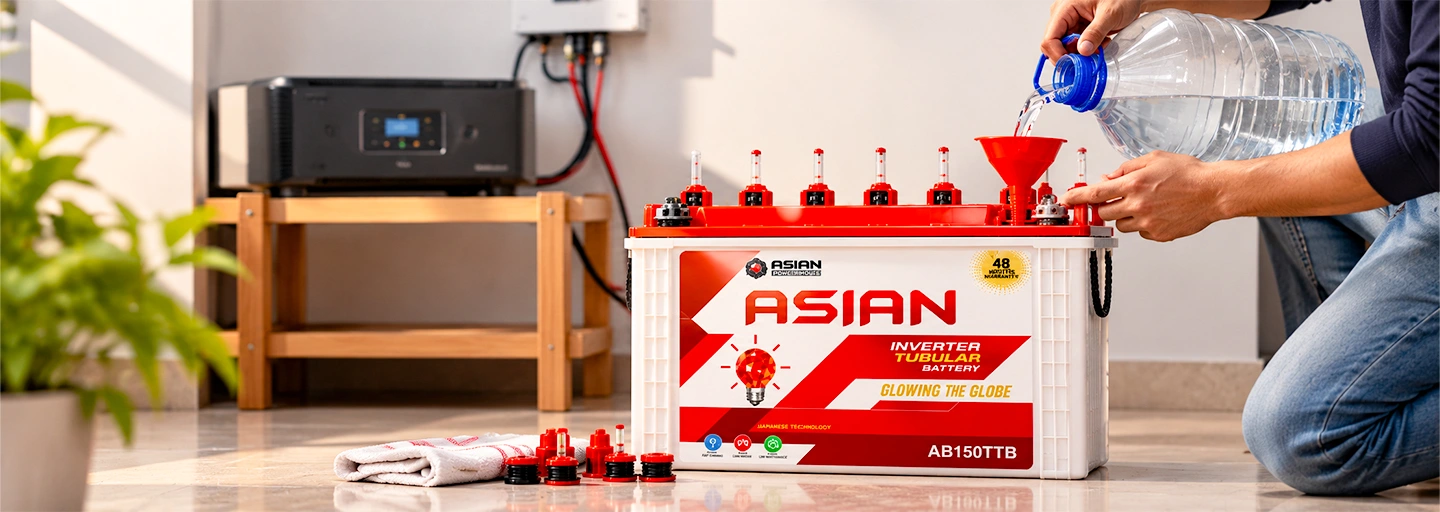
How to Refill Water in Inverter Batteries?
08 October, 2026
Is Tubular Battery Fit for Solar Applications?

24 September, 2026
2nd Annual General Meeting (AGM) Notice



Comments 0
Write a Comment