
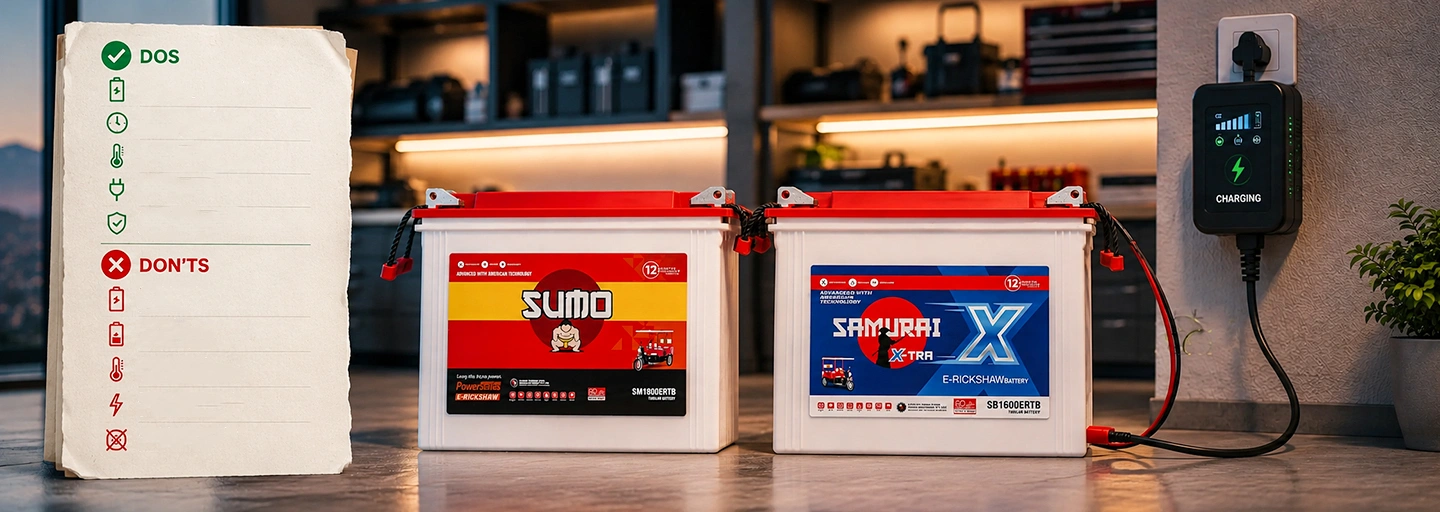
How to Charge Your EV Battery Correctly in Nepal: Do’s and Don’ts for Long Battery Life
- Battery Care |
- Asian Batteries |
- 16 July, 2026 |
- 53 views |
- 0 comments
With the rise in Electric Vehicle technology, global attention towards environmental conservation, attention from governments, and growing charging infrastructure, the demand for and use of EVs in Nepal is rising. Electric vehicles have become a priority of major manufacturers, automobile distributors, and consumers in Nepal due to their low running cost, performance, and rising costs […]
Table of Content
- Why Proper Charging Habits Matter for EV Battery Health
- Dos and Don’ts for higher battery life
- 1. Do follow 80/20 rule
- 2. Do: Use Manufacturer-Recommended Chargers and Voltage Settings
- 3. Do: Smooth driving
- 4. Don’t Charge Immediately After a Long Hot Ride
- 5. Don’t Let the Battery Drain Completely
- 6. Don’t Rely Heavily on DC Fast Charging
- How Nepal’s Power Fluctuations Affect EV Charging Safety
- Should You Use a Voltage Stabilizer While Charging an EV in Nepal?
- Overnight Charging: Is It Safe in Nepal?
- Don’t Forget the EV’s 12V Auxiliary Battery
- Conclusion
With the rise in Electric Vehicle technology, global attention towards environmental conservation, attention from governments, and growing charging infrastructure, the demand for and use of EVs in Nepal is rising. Electric vehicles have become a priority of major manufacturers, automobile distributors, and consumers in Nepal due to their low running cost, performance, and rising costs of petroleum products. When it comes to electric vehicles, the battery is their important component, as it powers the vehicle system and motor. An EV user in Nepal must carefully use their vehicle during driving and charging to ensure its battery lasts longer. A safe and appropriate charging habit always helps to increase your battery performance and lifespan.
This blog provides information about how you can use your EV and implement effective charging habits to make use of the battery correctly in Nepal. The things you should do and you should avoid to get higher battery performance and life are explained.
Why Proper Charging Habits Matter for EV Battery Health
Most of the electric vehicles use lithium-ion batteries that are designed for long-term durability and performance. However, it is important to know that these batteries, regardless of technologies, degrade over time. The factors like charging habits, temperatures, and driving habits accelerate the process. While EVs are equipped with a Battery Management System (BMS) to monitor battery voltage and temperature, it alone is not enough to manage or minimize rapid battery degradation.
Proper charging habits such as charging following the 80/20 rule, avoiding charging during extreme heat, limiting FC fast charging, and using the recommended charger by the manufacturer are important. These habits prevent an acceleration of your EV’s lithium-ion cells, protect the battery from rapid capacity loss and permanent battery stress, and maintain the value of your EV.
Dos and Don’ts for higher battery life
For long-lasting battery backup, durability, and performance, you need to follow habits that help in reducing battery stress and rapid degradation. You must also avoid factors that trigger stress on the battery.
1. Do follow 80/20 rule
When charging the battery, follow the 80/20 rule, which says to charge the battery up to 80 % and put it on charging when the battery drops to 20%. You can follow the rule during daily or normal usage. Only charge 100% during long trips and journeys.
2. Do: Use Manufacturer-Recommended Chargers and Voltage Settings
Only use manufacturer-recommended chargers and voltage settings in an emergency. Using a recommended and certified chargers helps to meet the battery charging condition and communicate with the vehicle’s battery management system.
3. Do: Smooth driving
Your driving habit also influences the battery health and durability. Smooth acceleration, gradual braking, and maintaining consistent speed help in reducing excessive battery consumption and stress. If your vehicle supports a regenerative braking system, you can use it to recover battery charge.
4. Don’t Charge Immediately After a Long Hot Ride
Avoid charging your battery immediately after a long-hour ride, as during that period, the battery temperature can be high. Charging the battery might increase the thermal stress of your vehicle battery. Waiting for a few moments to let the battery cool can be the best practice for healthy charging.
5. Don’t Let the Battery Drain Completely
Never ride or drive your electric vehicle when the battery level is below 20% or low unless it’s during emergencies. This increases deep discharge cycles and puts stress on lithium-ion battery cells. The best way is maintaining the battery under 20 to 80% and preparing early for a drive or ride.
6. Don’t Rely Heavily on DC Fast Charging
During a long journey, using the DC fast charging in the charging station can be common. But avoid using DC fast charging daily. While DC fast charge provides convenience, regular use of it increases battery heat and triggers battery deterioration over time. For regular charging, using home or workplace AC charging can be best for longer battery life.
How Nepal’s Power Fluctuations Affect EV Charging Safety
Over the last few years, Nepal has significantly improved its electricity and EV charging infrastructure. However, due to natural calamities and technical issues, the occurrence of voltage fluctuation and constant power outage is common in most areas.
While EVs are installed with a battery management system, sudden changes in voltage increase the risk of charging interruption and put stress on the battery and charging systems. These situations can yet be managed through a proper charging circuit, earthing, and proper installation of an electrical system. In case of power interruption or voltage fluctuation, disconnecting the vehicle from charge and consultation with a technician can be an ideal choice.
Should You Use a Voltage Stabilizer While Charging an EV in Nepal?
As mentioned above, the event of voltage fluctuation is common in Nepal due to technical issues. To manage such an event, installing a voltage stabilizer can be beneficial to safeguard your vehicle from damage related to high or low voltage. A voltage stabilizer can be a worthy investment that helps in protecting your device’s battery health and charging system.
Overnight Charging: Is It Safe in Nepal?
Overnight charging is safe in Nepal, but in situations where you use a manufacturer-recommended charger, avoid extension cords, have installed a voltage stabilizer, and have a dedicated charging point with proper circuit protection.
The battery management system in your EV automatically manages the charging process by discharging when your vehicle battery reaches a certain level
Don’t Forget the EV’s 12V Auxiliary Battery
The main high voltage is undoubtedly the important component of your EV. But your vehicle is also equipped with a 12V auxiliary battery or SLI battery that provides power to key electronic components like lighting, electronics, infotainment, and important systems. While taking care of the main battery, you must also consider monitoring the 12 V SLI battery, as its failure may cause your vehicle to shut down or limit the performance of the vehicle system. Therefore, it is important to monitor the status and performance of your EV’s auxiliary battery.
Conclusion
Your electric vehicle charging habit, driving habit, and usage of the manufacturer-recommended charger significantly influence the durability and performance of the battery. Charging following the 80/20 rule, smooth driving, limiting use of fast chargers, and installing a voltage stabilizer help in protecting your battery from rapid degradation.
In addition to the main battery, checking the performance and condition of the SLI battery of your electric vehicle is important for operating the vehicle’s lights, infotainment, and key electrical systems. Time inspection and replacement of SLI batteries are important for smooth operation of your vehicles. In case you need a replacement for the auxiliary or SLI battery of your electric vehicle, contact Asian Batteries. Asian Batteries offers reliable, powerful, and durable SLI batteries designed for EVs at the best price and warranties.
More Related Blogs
13 October, 2026
How to Refill Water in Inverter Batteries?
08 October, 2026
Is Tubular Battery Fit for Solar Applications?

24 September, 2026
2nd Annual General Meeting (AGM) Notice



Comments 0
Write a Comment