
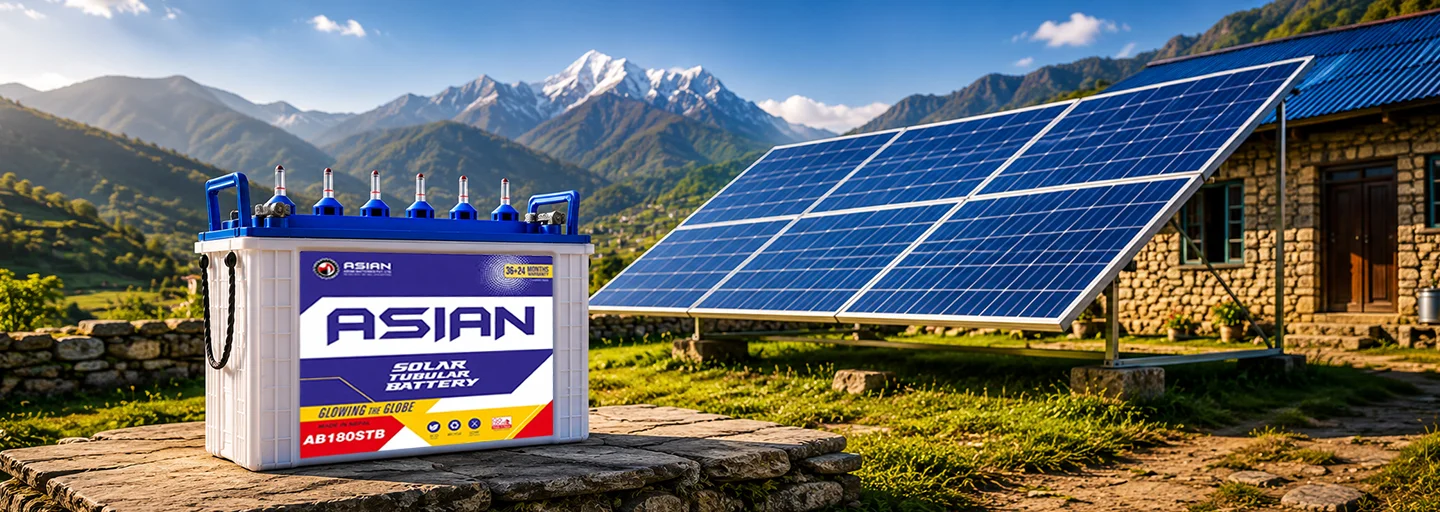
Off-Grid Solar Systems for Rural Nepal: Which Battery Technology Lasts Longest?
- Nepal Energy |
- Asian Batteries |
- 30 July, 2026 |
- 47 views |
- 0 comments
Nepal has improved significantly in connecting the nation with the electricity grid, as overall access to electricity has reached around 98%. However, connectivity still remains a challenge in remote communities and regions due to various factors. And in rural areas where the electricity grid is connected, the challenge of proper supply exists due to various […]
Table of Content
- The Challenges of Using Solar Batteries in Rural Nepal
- 1. Extreme Temperatures and Weather Conditions
- 2. Limited or No Grid Access
- 3. Limited Maintenance and Technical Support
- Battery Technology Comparison for Rural Solar Systems
- Which Battery Technology Lasts Longest For Solar Systems In Rural Nepal Conditions?
- Cost vs. Longevity: Choosing the Right Battery for Rural Households and Community Systems
- Government and NGO Solar Programmes Supporting Rural Nepal
- Why Choose Asian Batteries for Rural-Ready Solar Power?
Nepal has improved significantly in connecting the nation with the electricity grid, as overall access to electricity has reached around 98%. However, connectivity still remains a challenge in remote communities and regions due to various factors. And in rural areas where the electricity grid is connected, the challenge of proper supply exists due to various conditions, including extreme weather conditions, delayed periodic maintenance, and long-distance electricity loss.
To support the electricity needs of these remote and rural areas in Nepal, many households, health posts, community facilities, and schools have been relying on off-grid solar systems. An off-grid solar system charges the battery during daylight, powering the home or building. However, the performance of the solar system depends upon its battery as long-term backup; durability and reliable performance depend upon the battery type.
But which is the best battery for use in off-grid solar in rural areas of Nepal? In this blog, we provide all the required information about solar battery technologies and requirements for best performance and maintenance requirements for long-term performance and reliability.
The Challenges of Using Solar Batteries in Rural Nepal
While the off-grid solar systems are a must for power supply in rural areas of Nepal, they also face several challenges. Solar systems face difficulties in operation due to various conditions, including poor weather, a limited electricity grid, and limited technical support or maintenance.
1. Extreme Temperatures and Weather Conditions
Being a geographically diverse country, Nepal experiences harsh climatic conditions, from extreme cold weather in the Himalayan region to humid and hot temperatures in the plain. Solar batteries, during extreme weather, face difficulties performing in full capacity. The cloud during winter and the rainy season limits the solar panel’s ability to charge the battery properly. As batteries don’t get enough charge, they experience stress and lead to deeper discharge cycles that shorten battery life.
2. Limited or No Grid Access
Due to limited or no access to the electricity grid, the only alternative for electricity generation in the remote area of Nepal is the use of solar panels. Solar batteries are used to store energy and provide backup for daily use. But due to heavy application and lack of charge during extreme weather, a battery can experience stress, leading to quick damage or degradation. This is the reason a solar battery with reliability and durability matters in the remote region of Nepal.
3. Limited Maintenance and Technical Support
Due to the remote region, the households and community buildings may not get proper maintenance and technical support to maintain solar systems in an optimal state. Due to this routine maintenance, troubleshooting and regular inspection can be difficult. Because of such situations, batteries requiring frequent inspection and maintenance cannot be ideal for use in remote regions. One must consider durable battery installation that requires low maintenance but is durable.
Battery Technology Comparison for Rural Solar Systems
Using batteries of different technologies gives different performance and advantages when using them in off-grid applications in remote areas of Nepal. The comparisons of battery technology for solar applications in Nepal are provided below:
| Battery Technology | Main Advantages | Limitations | Suitability for Rural Solar |
| Flooded Lead-Acid | Affordable and widely available in Nepal | Requires frequent maintenance and inspection. | Suitable only where regular maintenance is available. |
| Absorbent Glass Mat (AGM) | Sealed battery requiring low maintenance and gives good performance | Higher cost than conventional lead-acid and may have limited deep-cycle durability | Suitable for smaller systems with limited maintenance |
| Tubular | Strong deep-cycle performance, durable, and reliable for frequent cycling | Requires some maintenance and has a higher initial cost than basic batteries | Excellent balance of cost, durability, and performance |
| Lithium | Long cycle life, high efficiency, lightweight, very low maintenance | Higher upfront investment and requires suitable battery management | Suitable for longevity and premium off-grid systems |
Which Battery Technology Lasts Longest For Solar Systems In Rural Nepal Conditions?
In rural areas of Nepal, where climate, geographical factors, lack of technicians, and cost are important factors to consider, solar tubular batteries offer longevity and durability. It is because solar tubular batteries are designed for deep-cycle durability and reliable backup and offer an excellent charge retention rate. These batteries require less maintenance in comparison to flooded lead-acid batteries and are durable and performative.
While lithium batteries can also provide power backup or match the energy needs of rural Nepal, they can be costly for rural households and community projects. Tubular can be a balanced option of being affordable and performative, ensuring a long lifespan, increased reliability, affordability, and availability.
Cost vs. Longevity: Choosing the Right Battery for Rural Households and Community Systems
Whether you are purchasing a battery for urban use or rural use, choosing the right battery is important. One must always consider longevity and durability over the cost of the battery, as low cost can lead to high expense in the long term due to the requirement of excessive maintenance and early replacements. Similarly, choosing longevity can be costly initially but gives reliability and long-term durability, which decrease overall maintenance costs and replacement expenses.
Also, a battery must be purchased and installed on the basis of usage. If the usage is high, a high-capacity battery must be installed to match the energy needs of the household. Insufficient battery capacity may cause the battery to stress and decrease reliability issues. Meanwhile, using a larger battery size than actually needed can turn out to be expensive in places where costs are essential factors to consider.
Government and NGO Solar Programmes Supporting Rural Nepal
To support the energy needs and usage requirements of electricity for daily livelihood in the remote or rural regions of Nepal, government and NGO solar programs have also supported the installation of solar panels in households. Their initiatives have played a role in expanding the use of renewable energy all over Nepal. But for these types of projects, batteries with proper durability and longevity are important. For the government and NGO or event, the household owner must focus on installing a battery that can deal with high-altitude weather, usage patterns, and extreme temperatures.
Why Choose Asian Batteries for Rural-Ready Solar Power?
If you are planning to install solar tubular batteries for long-term, reliable, and efficient use in a remote area of Nepal while matching weather, temperatures, and usage needs, then tubular batteries by Asian Batteries can be the ideal choice. Whether you are using batteries for rural or urban solar setups in Nepal, Asian Batteries provides strong and reliable performance.
Asian Batteries are designed to provide deep-cycle durability, reliable backup, and the best charge retention rate. Their tubular batteries are affordable, come with a warranty, and are ideal for use in remote areas where climate and operating temperature are challenging. Contact Asian Batteries today and get the ideal tubular battery for use in your solar system.
More Related Blogs
13 October, 2026
How to Refill Water in Inverter Batteries?
08 October, 2026
Is Tubular Battery Fit for Solar Applications?

24 September, 2026
2nd Annual General Meeting (AGM) Notice



Comments 0
Write a Comment