
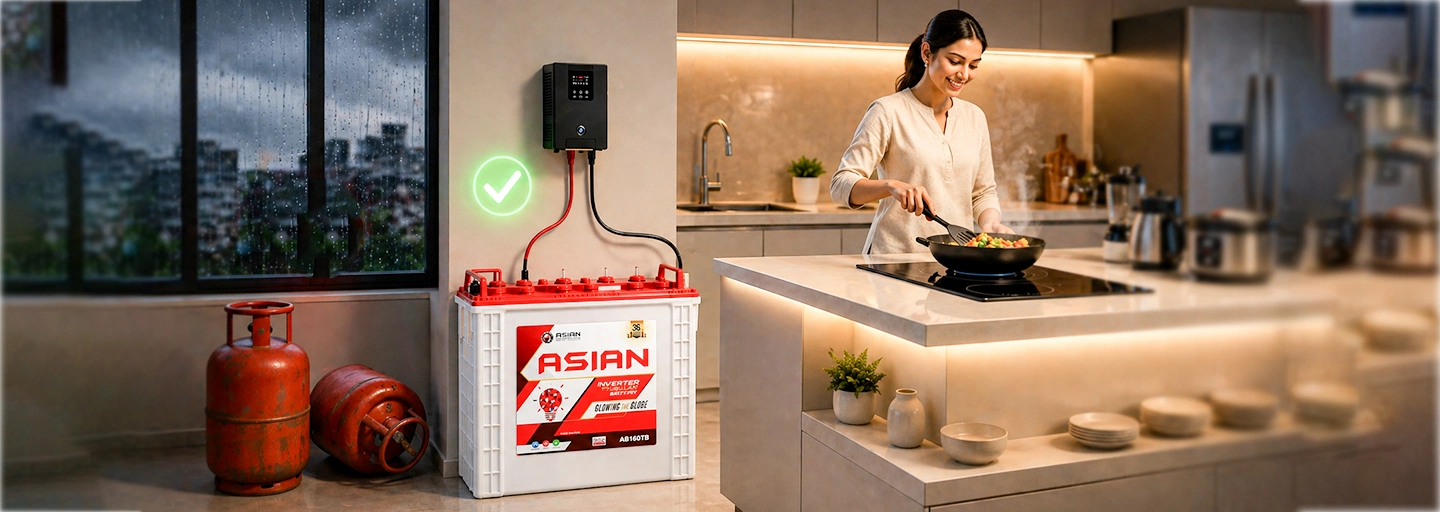
LPG Shortage Crisis: Best Battery Backup for Induction and Smart Kitchen Alternatives
- Sustainable Energy |
- Asian Batteries |
- 30 April, 2026 |
- 143 views |
- 0 comments
The cooking gas crisis in Nepal is no longer just an inconvenience but a reality for every household which depends on LPG. After the Strait of Hormuz faced severe disruption, the global oil and LPG supply has come to halt. The Hormuz strait is a single chokepoint which handles around 20% of the world’s oil […]
Table of Content
- The Shift Toward Electric Cooking in Nepal
- Why Induction Cooking Makes Sense Right Now
- Why Battery Backup Matters for Induction Cooking
- Table: Power Requirement: Induction vs. Other Appliances
- Best Battery Backup Options for Induction Cooking in Nepal
- Smart Kitchen Alternatives to Reduce LPG Dependence
- Quick Guide: Which Setup Fits Your Situation?
- Conclusion
- Frequently Asked Questions
- 1. Can I run an induction cooktop on an inverter and battery?
- 2. Which battery is best for induction cooking in Nepal?
- 3. Can solar panels power induction cooking in Nepal?
The cooking gas crisis in Nepal is no longer just an inconvenience but a reality for every household which depends on LPG. After the Strait of Hormuz faced severe disruption, the global oil and LPG supply has come to halt. The Hormuz strait is a single chokepoint which handles around 20% of the world’s oil and LPG trade. For a landlocked country like Nepal which imports all of its petroleum products, it’s impact is being felt immediately.
The Nepal Oil Corporation (NOC) Nepal’s only petroleum products importer began rationing LPG in March 2026 by selling only half-filled cylinders. Petrol prices rose by Rs 15 to Rs 17 per litre and diesel by Rs 10 to Rs 25 per litre in consecutive hikes. Nepali households in Kathmandu, Pokhara, Biratnagar, and Birgunj felt the price rise directly in their kitchens as the Gas prices increased from 1910 to 2010. Currently for many families, the search for an alternative to LPG cooking in Nepal is no longer optional.
| LPG Shortage – Key Updates and Numbers for Nepal (2026) | |
| Nepal Oil Corporation Decision | Half-cylinder rationing from 13 March 2026, Nepal spent NPR 139.10 billion on petrol, diesel, and LPG imports in 7 months of FY 2025/26. |
| Strait of Hormuz Disruption | 20% of global oil supply is affected. |
| Price Increase | Petrol up Rs 15-17 per litre | Diesel up Rs 10-25 per litre in recent hikes LPG Rs 100 per cylinder. |
| LPG-dependent households in Nepal | Estimated 70% of urban cooking households. |
The Shift Toward Electric Cooking in Nepal
The LPG shortage impact in Nepal has pushed many urban households to consider induction cooktops and electric alternatives. Induction cooking was already growing in cities like Kathmandu and Lalitpur where Nepal Electricity Authority supply is more reliable. The current crisis has turned that slow trend into a fast one.
Sales of induction cooktops jumped sharply in early 2026 as households scrambled to reduce LPG dependence. But electric cooking comes with its own condition: it needs a stable power supply.
Why Induction Cooking Makes Sense Right Now
An induction cooktop is not a luxury in the current situation. It is a practical tool for households and small restaurants in Nepal looking to move away from gas dependency. Here are the main reasons:
- Fast cooking: Induction heats the cookware directly. Boiling water takes 3 to 4 minutes compared to 7 to 8 minutes on a gas stove.
- Energy efficient: Induction converts about 85 to 90% of energy into heat. A gas stove typically reaches 40 to 55% efficiency.
- Safer in closed spaces: No open flame, no gas leak risk, no carbon monoxide buildup. This matters for apartments in Kathmandu and hill towns.
- Lower running cost: NEA electricity for cooking is cheaper per unit than buying LPG at current market rates.
Why Battery Backup Matters for Induction Cooking
Nepal still faces regular load shedding and unscheduled power cuts, especially outside the Kathmandu Valley. In hill districts, remote towns, and even parts of the Terai, power can go out for 2 to 6 hours a day. If a household switches fully to induction cooking in Nepal without a battery backup system, any power cut means no cooking.
A home inverter with a suitable battery keeps the induction cooktop running during short outages. The system is the same one used for fans, lights, and routers but the key is choosing or sizing the battery for the higher wattage that induction cooktops require. The table below gives an outline of power required for various appliances under same system,
Table: Power Requirement: Induction vs. Other Appliances
| Appliance | Wattage | Battery Ah Needed (2 hrs) |
| LED Lights x 5 | 50W | 12 Ah |
| Ceiling Fan | 75W | 15 Ah |
| Wi-Fi Router | 15W | 3 Ah |
| Induction Cooktop (1200W) | 1200W | 240 Ah |
| Electric Rice Cooker (800W) | 800W | 160 Ah |
Note: Induction cooktops draw significantly more power than standard household appliances. A dedicated high-capacity battery bank or a large tubular battery is needed to run induction cooking during outages.
Best Battery Backup Options for Induction Cooking in Nepal
There are four main battery backup options for induction cooking available in the Nepali market. Each works differently and suits different household setups:
| Battery Type | Best For | Typical Capacity | Est. Price (NPR) |
| Tubular Battery | Inverter + induction combo at home | 100 Ah to 200 Ah | 18,000 to 35,000 |
| Lithium-Ion Battery | Compact, fast-charge home setups | 50 Ah to 150 Ah | 40,000 to 90,000 |
| Flat Plate Battery | Light cooking (electric kettle/rice cooker) | 50 Ah to 100 Ah | 10,000 to 18,000 |
| Portable Power Station | Small kitchen, travel, remote areas | 500 Wh to 2000 Wh | 35,000 to 120,000 |
For most Nepali homes in Kathmandu, Pokhara, Chitwan, and Dhangadhi, a tubular battery of 150 Ah to 200 Ah paired with a 1500 VA inverter is the most practical and cost-effective solution for induction cooking backup.
Smart Kitchen Alternatives to Reduce LPG Dependence
Alongside induction cooking, other electric cooking alternatives in Nepal can further reduce dependence on LPG. A hybrid kitchen setup that combines these tools gives the household flexibility even when power or gas is limited:
- Electric pressure cooker: Uses 700W to 1000W and cooks pulses, rice, and meat faster than a gas cooker. Works on inverter power for shorter sessions.
- Electric rice cooker: Draws 500W to 800W. Standard in most Kathmandu apartments and easy to run on a 100 Ah battery for a 30 to 45 minute cook cycle.
- Solar hybrid kitchen: A solar panel charging a tubular battery bank can power an induction cooktop during the day when sunlight is available. This is a growing solution in hill districts and remote areas of Nepal.
- Portable power station with solar input: For households in Mustang, Humla, or high-altitude areas where LPG delivery is irregular, a portable power station paired with a small solar panel is an independent cooking solution.
Quick Guide: Which Setup Fits Your Situation?
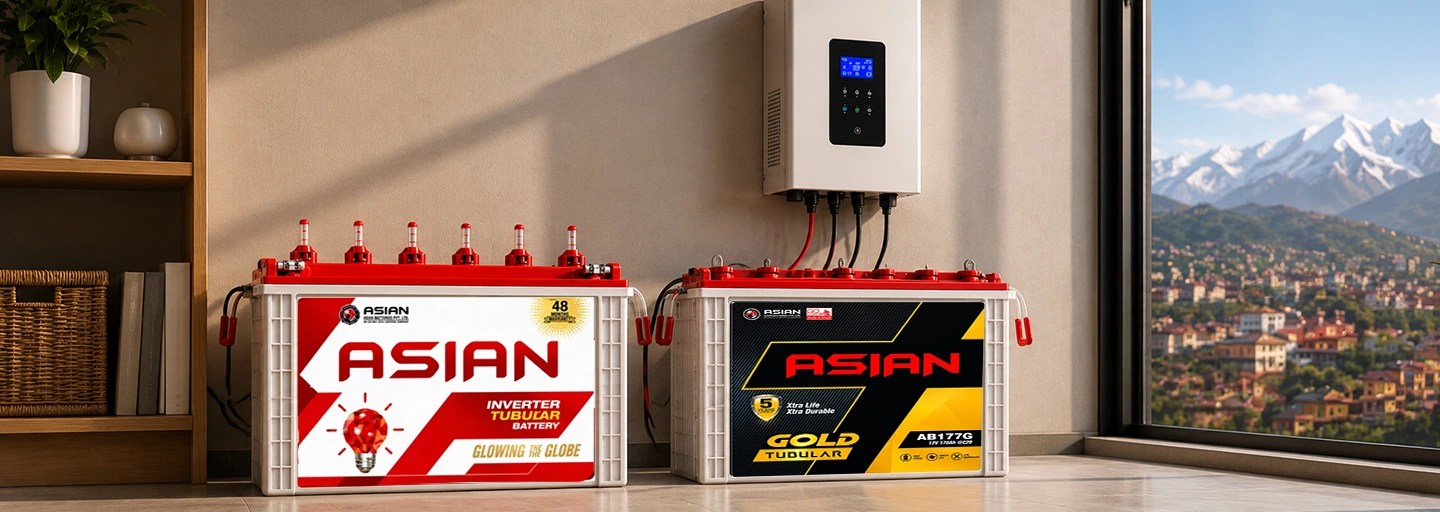
- Urban apartment (Kathmandu/Pokhara): 240 Ah AB240TB Asian Tubular Inverter Battery + 1200W induction cooktop
- Semi-urban home (Chitwan/Birgunj): 160 Ah AB160TB Asian Inverter Tubular Battery + electric rice cooker + induction
- Hill district household: Solar panel + 200 Ah AB200TB Asian Inverter Tubular battery + induction or electric cooker, Remote or off-grid: Portable power station (1000Wh+) + solar input + electric kettle/cooker
Conclusion
The LPG shortage crisis in Nepal caused by the Iran-US conflict has made one thing clear: homes that depend entirely on gas for cooking are exposed to supply chain disruptions that are outside their control. Switching to induction cooking is a practical, efficient, and safer choice, but it requires a reliable electricity source.
A well-sized battery backup system, paired with the right inverter, makes induction cooking a real alternative to LPG even during power cuts. Whether a household is in urban Kathmandu or a remote hill district, the right battery setup can provide uninterrupted cooking and reduce dependence on imported gas.
Need a battery for induction cooking backup in Nepal?
Asian Batteries manufactures and supplies tubular batteries, solar batteries, and inverter batteries across all 7 provinces of Nepal. Our branches in Kathmandu, Pokhara, Biratnagar, Birgunj, Dhangadhi, and Butwal can help you find the right battery for your home kitchen setup.
Frequently Asked Questions
1. Can I run an induction cooktop on an inverter and battery?
Yes, a 1500 VA or higher inverter paired with a 150 Ah to 200 Ah tubular battery can run a standard 1200W induction cooktop for short cooking sessions of 20 to 40 minutes during a power cut.
2. Which battery is best for induction cooking in Nepal?
A tubular battery of 150 Ah to 200 Ah is the best balance of cost and performance for running induction cooktops in Nepal. Lithium-ion batteries offer faster charging and longer life but cost significantly more.
3. Can solar panels power induction cooking in Nepal?
Yes, but a large panel and battery bank are needed. A 300W to 500W solar panel system charging a 200 Ah tubular battery can support an induction cooktop for 1 to 2 cooking sessions per day.
More Related Blogs


Comments 0
Write a Comment