
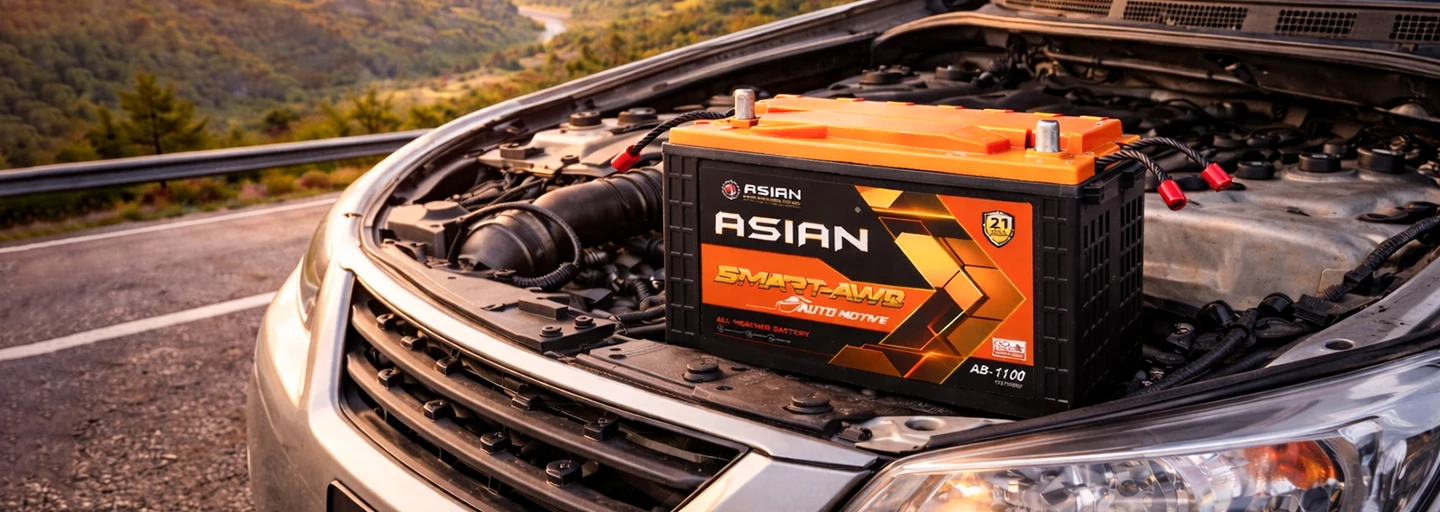
Top 5 Mistakes Nepali Drivers Make with Their Car Batteries And How to Avoid Them
- Battery Care |
- Asian Batteries |
- 10 April, 2026 |
- 152 views |
- 0 comments
Nepalese vehicle owners face many issues and problems related to their automobile batteries, causing them difficulty in starting and operating their vehicles smoothly. The requirement of idling in long jams, huge differences in climates, poor road conditions, and poor battery maintenance practices of vehicle owners are key contributing factors to short car battery life. Most […]
Table of Content
- 5 Common Mistakes Most Nepali Drivers Makes
- 1. Leaving headlights or accessories on while the engine is off
- 2. Ignoring terminal corrosion until it’s too late
- 3. Skipping battery checks during regular servicing
- 4. Using a mismatched charger or incorrect charging voltage
- 5. Buying low-quality, uncertified batteries to save money short-term
- Quick battery care checklist for Nepali drivers
- i) Proper attention
- ii) Regular Battery Check
- iii) Periodic Maintenance
- iv) Seasonal Care and Driving Tips
- v) Warning Signs
- Conclusion
- Frequently Asked Questions (FAQs)
- 1. What are common mistakes when charging batteries?
- 2. How to avoid battery problems?
- 3. What are the safety precautions for car batteries?
- 4. What are the three main causes of battery failure?
Nepalese vehicle owners face many issues and problems related to their automobile batteries, causing them difficulty in starting and operating their vehicles smoothly. The requirement of idling in long jams, huge differences in climates, poor road conditions, and poor battery maintenance practices of vehicle owners are key contributing factors to short car battery life.
Most car drivers in Nepal take wrong steps by ignoring battery checks, neglecting periodic maintenance, and following habits that drain battery health rapidly. In this blog we introduce 5 common mistakes that most Nepali drivers make with their car batteries. We also provide the best battery-saving tips and guides to help car owners and drivers to maximize car battery life in Nepal.
5 Common Mistakes Most Nepali Drivers Makes
While the road condition, climate, traffic jams, and dust are key factors for quick battery damage in Nepal, most Nepalese vehicle or car drivers further commit additional mistakes to accelerate the damage. Some of the common mistakes that most Nepali drivers make that impact battery life include:
1. Leaving headlights or accessories on while the engine is off
Most Nepali drivers forget to turn off the car ignition properly after parking. Leaving headlights, speakers, and car systems drains the battery quicker while also hampering its battery life.
2. Ignoring terminal corrosion until it’s too late
The conditions such as high humidity, leaked electrolyte, dust, loose terminal connections, and low-quality lamps lead to corrosion buildup in the battery. Ignoring corrosion buildup damages the battery by creating insulation and a high-resistance terminal layer that disrupts electrical currents.
3. Skipping battery checks during regular servicing
One of the most common mistakes most Nepali drivers make is skipping battery checks during regular servicing. When servicing their cars, they don’t mention battery inspection or check the battery manually.
4. Using a mismatched charger or incorrect charging voltage
When charging or checking the car battery, Nepali drivers use locally available chargers without focusing on voltage requirements and battery or charger type. Using the wrong charger and ignoring voltage requirements leads to battery undercharge or overcharge that leads to battery damage. Battery overheating, internal plate damage, and swelling are some of the common results of a mismatched charger.
5. Buying low-quality, uncertified batteries to save money short-term
Buying an unappropriate battery without quality, certification, and reliability is one of the major mistakes most Nepali drivers or vehicle owners commit. While low-quality batteries cost lower upfront expenses, they prove to be costly in the long run. Low-quality batteries of random brands damage faster in comparison to high-performance and durable batteries from reliable and reputable brands like Asian Batteries. Using a low-quality battery also damages cars’ electric systems due to improper voltage and an increased chance of chemical and fire hazards.
Quick battery care checklist for Nepali drivers
To avoid the common mistake provided above, Nepali car owners and drivers can follow quick battery care checklists. Following battery care and inspections on a regular or periodic basis helps in minimizing battery drain and corrosion and increasing long-term performance and durability. The quick battery care checklist that Nepali drivers can follow for increased lifespan of their battery life includes the following:
i) Proper attention
Give proper attention to battery-saving habits such as turning off ignition and switching off headlights or car electronic systems when idle or when the engine is off. It helps to reduce extensive battery drain and helps in durable performance.
ii) Regular Battery Check
Regular battery checks involve checking battery terminals, connections, corrosion buildups, and damages. Checking for signs or symptoms of a battery helps in taking battery-preventive measures before it is damaged completely.
iii) Periodic Maintenance
Periodic maintenance involves servicing the battery after inspections. It involves changing battery fluids, cleaning corrosion or rust buildup in terminals, and replacing terminal wire if required. Periodic maintenance helps to keep the battery in an optimal state and increase its life through a smooth flow of electricity.
iv) Seasonal Care and Driving Tips
As Nepal’s climate and temperature vary according to season, considering the season and following proper driving habits is important. During winter, prevent the battery from freezing by parking the vehicle or storing the battery inside the safe storage facility.
Similarly, during summer, parking a car in the shade or a cool place helps to avoid overheating. Also, taking long drives frequently and avoiding running electrical components for a long term can help further in long-term battery health and durability.
v) Warning Signs
Never ignore warning signs such as a battery error code on the dashboard, swelling of the battery, a faulty smell from the battery, and low power of the battery. In case you inspect the warning sign, replace the battery or take battery preventive measures to prevent further damage.
Conclusion
Most car drivers and owners in Nepal face battery performance and durability issues due to the common mistakes they commit. While the geography, climate, and road condition also play a role in decreasing battery performance, the driving habit and maintenance habit play a major role. Leaving the headlight on, ignoring terminal corrosion, skipping battery checks, using a mismatched charger, and choosing a low-quality battery are major mistakes most Nepali drivers commit.
For better battery durability, reliability, and smooth performance, regular battery checkups, observing warning signs, following seasonal driving habits, and periodic battery maintenance are important. If you are looking for a durable, high-performance, and reliable battery with proper certification for your car, visit Asian Batteries. Asian Batteries is a globally certified battery manufacturer and distributor that uses eco-friendly batteries in Nepal to ensure reliability and high battery performance in your vehicle.
Frequently Asked Questions (FAQs)
1. What are common mistakes when charging batteries?
The common mistakes most users commit when charging batteries are using an incompatible battery charger, using a damaged or low-quality connector, and charging on a soft surface. Undercharging and overcharging the battery are also major common mistakes most users commit in Nepal.
2. How to avoid battery problems?
You may avoid battery problems through following regular battery inspection, periodic servicing, cleaning terminals timely, and following appropriate charging habits. Considering the season and frequent long drives also helps to maintain a proper charge level.
3. What are the safety precautions for car batteries?
When checking, inspecting, or maintaining a car battery, following safety precautions is important for safety and protection from hazards. The safety precaution involves turning off the car engine and ignition, wearing safety glasses and gloves, disconnecting the negative terminal first, and holding the battery in an upright position.
4. What are the three main causes of battery failure?
Overcharging or undercharging of the battery, aging of the battery, and heavy battery use are the three main causes of early battery failure. Using low-quality batteries that do not meet the usage purpose further increases the battery failure rate.
More Related Blogs
13 October, 2026
How to Refill Water in Inverter Batteries?
08 October, 2026
Is Tubular Battery Fit for Solar Applications?

24 September, 2026
2nd Annual General Meeting (AGM) Notice



Comments 0
Write a Comment