
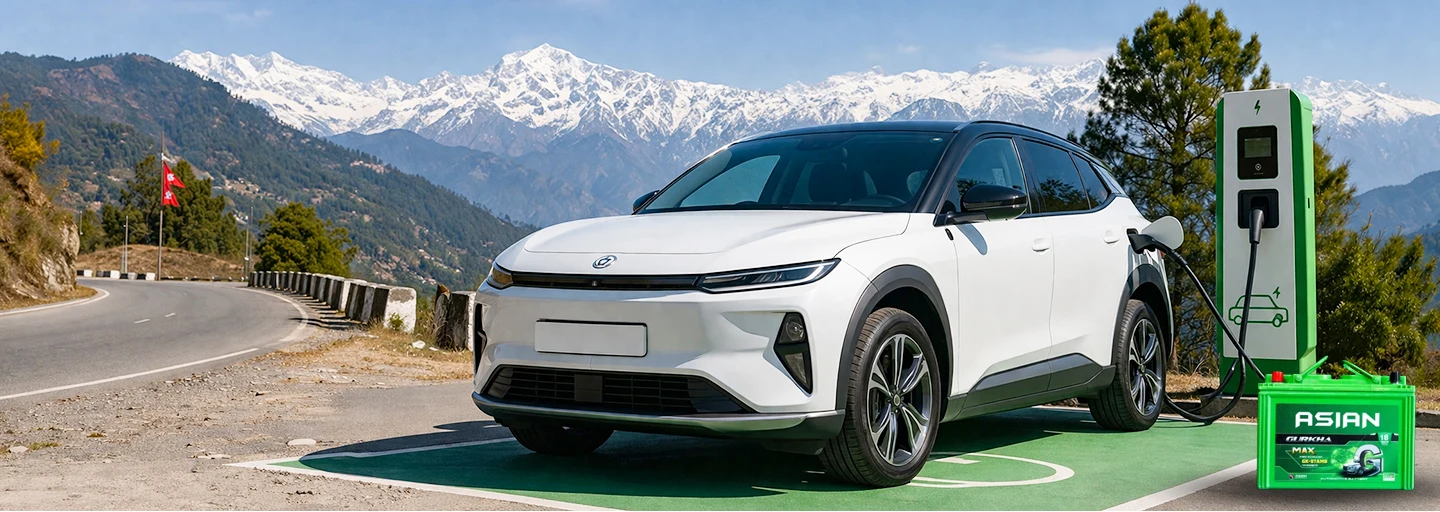
Electric Vehicle Growth in Nepal 2026: What the Numbers Say and Why Batteries Matter Most
- Nepal Energy |
- Asian Batteries |
- 16 April, 2026 |
- 797 views |
- 0 comments
The growing electric vehicle (EV) technology and its rapid market expansion have influenced the Nepalese automobile market. Rising fuel costs, the increasing cost of Internal Combustion (IC) vehicles, supportive EV policies by the government, and environmental sustainability awareness have further influenced the growth of Nepal’s EV market in 2026. From the introduction of the trolleybus […]
Table of Content
- Key Statistics: EV Registrations, E-Rickshaws on Road, and E-Bikes Sold
- Government Policy Driving EV Growth in Nepal
- i) Tax Exemptions and Reduced Customs Duty
- ii) Import Policies and EV-Friendly Regulations
- iii) Future Policy Outlook
- Why Battery Quality Is the Single Biggest Factor in EV Performance in Nepal
- The Role of Local Battery Manufacturers in Supporting Nepal’s EV Ecosystem
- Challenges in Nepal’s EV Growth in 2026
- Charging Infrastructure Gaps
- Battery Replacement Cost Still a Major Concern
- Parts availability
- What the Next 5 Years Look Like for EVs in Nepal
- How EV Owners in Nepal Can Choose the Right Battery
- Frequently Asked Questions (FAQs)
- 1. What is an EV auxiliary battery?
- 2. Which batteries are the best for EVs in Nepal?
- 3. Why is battery quality the most important factor for EVs in Nepal?
The growing electric vehicle (EV) technology and its rapid market expansion have influenced the Nepalese automobile market. Rising fuel costs, the increasing cost of Internal Combustion (IC) vehicles, supportive EV policies by the government, and environmental sustainability awareness have further influenced the growth of Nepal’s EV market in 2026.
From the introduction of the trolleybus (electric bus) in 1975, Nepal gradually adopted importing vehicles backed by battery technologies in four-wheeler, two-wheeler, and three-wheeler (e-rickshaw) sections. With the increasing rise and competition in the EV market in Nepal, the electric vehicle’s battery technology has emerged as an important criterion that drives sales. The battery technology determines the cost, performance, reliability, and sustainability.
In this blog we explain why Nepal’s EV market is growing in 2026 and is expected to further grow in the future. The government policy influencing EV growth, battery quality of electric vehicles that drive sales, and existing challenges of electric vehicles in Nepal are also explained. We provide information about the role of local battery manufacturers in supporting the EV vehicle ecosystem while also guiding users to choose the best auxiliary battery for their EVs for long-term performance and reliability.
Key Statistics: EV Registrations, E-Rickshaws on Road, and E-Bikes Sold
| Category | Statistic |
| Total EVs registered (Nepal) | A 35.1% rise in EV registration as 25000 EVs were registered in fiscal year 2082/83 according to Government EV Registration Data. The cumulative EV registration data till 2082/83 is 63,280. |
| EV Charging Stations | More than 490 charging stations in Nepal by various brands, including the government. |
| Total EV Imports | Over 44,500 electric vehicles imported into Nepal on fiscal year 2081/827,434 electric vehicle imports between mid-July and mid-March in fiscal year 2082/83 |
| Electric Cars Share | 73% of EV share in private passenger cars. The demand for EV in Nepal has grown by 50% to 60% in early 2026. |
Nepal has become one of the fastest-growing EV markets, with more than 73% of the import share of the EV market in 2026. In fiscal year 2082/83, there was a massive rise in EV registration, as 25,000 EVs were registered in Nepal. The important data of EVs is rising, as the year 2024/25 observed 44,500 electric vehicle imports, and 2025/26 observed 7,434 imports, which is forecasted to increase until the year-end.
Government Policy Driving EV Growth in Nepal
The Nepal government policy is promoting the import and sales of EVs in Nepal. The low tax rate, increasing charging infrastructures, reduced import tax and custom duties, and recent approval of retrofitting old IC engine vehicles with electric motors and batteries show EV promotion by the government.
i) Tax Exemptions and Reduced Customs Duty
The tax exemption and reduction of custom duty in comparison to IC engine vehicles have made EVs affordable in Nepal. Simplified registration process, easy banking priority, and an aggressive move in building EV infrastructure are key drivers of the EV sales boost in Nepal.
ii) Import Policies and EV-Friendly Regulations
Nepal’s support for the import of EV vehicles such as cars, Auto rickshaws, and two-wheelers has made global brands easy to enter in Nepal. Electric vehicle-friendly regulations like retrofitting IC engines to EV systems show a bold move of the government towards EV promotions in nepal. .
iii) Future Policy Outlook
The Government of Nepal sets a policy that promotes EV use and lessens dependency on non-renewable sources of energy such as petrol and diesel in Nepal. Increased usage of EVs increases consumption of Electricity (a renewable source of energy) that Nepal produces via hydropower. These promote environmental sustainability and use of green energies as a fight against global warming.
Why Battery Quality Is the Single Biggest Factor in EV Performance in Nepal
Although there has been a massive rise in EV imports of various brands in Nepal, one major concern most Nepali EV consumers have is their battery quality. The battery backup, replacement availability in the future, and cost are key concerns. Some key concerns of EV buyers in Nepal are the following:
- Battery performance over time and its range
- Performance and reliability of battery in changing climate and temperatures
- Availability of battery for replacement in future
- Cost of battery replacement
The Role of Local Battery Manufacturers in Supporting Nepal’s EV Ecosystem
Local battery manufacturers like Asian Batteries play an important role in supporting Nepal’s EV ecosystem.Battery manufacturers and distributors supply high-quality and reliable auxiliary batteries to meet the increased demand of EVs.
As auxiliary batteries are important for the function of EVs’ electrical systems and support the function of main battery packs, their availability in Nepal is supported by major manufacturers like Asian Batteries.
Local manufacturers ensure production and supply of auxiliary batteries for competitive and reliable performance in EVs like E-Rickshaws, two-wheelers, and Cars. In addition, they also ensure these batteries come affordable and have the best after-sales service, like warranty, periodic checkups, and maintenance.
Challenges in Nepal’s EV Growth in 2026
While there is tremendous growth of EV vehicle import and registration, several challenges exist for EVs in Nepal. From parts availability and charging infrastructure to main battery replacement cost, many buyers have questions.
Charging Infrastructure Gaps
Although there is improvement in charging infrastructure in Nepal, the coverage remains uneven. Most of the charging infrastructure is focused on central or urban areas, while hills and remote areas lack charging facilities. Also during peak time, the existing chargers are not enough to accommodate existing numbers of EVs.
Battery Replacement Cost Still a Major Concern
Due to sophisticated technology, EV batteries are costly during replacement. Its replacement requires a huge cost that impacts the resale value of the vehicle.
Parts availability
The availability of parts and accessories of EV vehicles is limited. Unlike IC engines, parts such as auxiliary batteries, electrical components, and accessories are not easily available. Some manufacturers, like Asian Batteries, have been working to fix these issues by providing durable, reliable, and warranty-backed auxiliary batteries for various models of EV.
What the Next 5 Years Look Like for EVs in Nepal
The common 5 years for EVs in Nepal is positive, with higher adoption of EVs in the private and public sectors. The government and various organizations have been working to develop charging infrastructure in key locations of Nepal. Also, research and development for long-range battery technologies ensures higher range to solve range anxiety in the future. The government policy and local battery manufacturer also might work on battery recycling and management in the future.
How EV Owners in Nepal Can Choose the Right Battery
One of the important components or parts on an EV is its auxiliary battery, which powers electrical components of the vehicle. When the auxiliary battery gets damaged, the EV is unable to start or operate and requires replacement. One can choose battery replacement by the following:
- Choosing trusted brands that provide compatible batteries with warranties
- Selecting appropriate battery model and size
- Choosing battery that are maintenance-free and suitable for climatic condition of Nepal
- Selecting a battery brand that provides after-sales support
If you are an EV owner searching for a reliable, durable, and compatible battery, contact Asian Batteries. Asian Batteries is Nepal’s leading battery manufacturer that provides reliable, durable, and high-performing batteries for various types of EV vehicles with warranties and after-sales support in Nepal.
Frequently Asked Questions (FAQs)
1. What is an EV auxiliary battery?
“EV auxiliary battery” refers to the secondary battery that powers a car’s electronic systems such as infotainment, windows, lights, and accessories. While the main battery of the EV powers the motor, the auxiliary battery boots the computer and electronics.
2. Which batteries are the best for EVs in Nepal?
Asian batteries are the best batteries to purchase for your Ev batteries like e-rickshaws, bikes, and four-wheeler vehicles in Nepal. These batteries come with a warranty and after-sales support services, ensuring your vehicle runs smoothly without any trouble or issue.
3. Why is battery quality the most important factor for EVs in Nepal?
Battery quality is one of the important factors for EVs in Nepal, as it affects durability, vehicle performance, and suitability in various temperatures or climates.
More Related Blogs
13 October, 2026
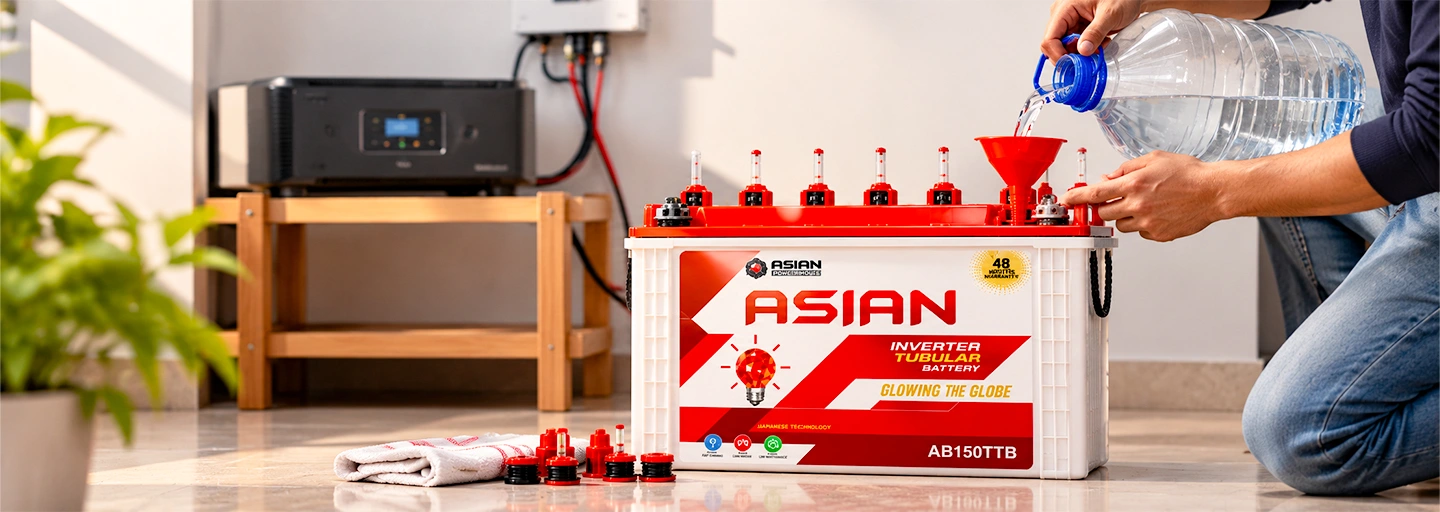
How to Refill Water in Inverter Batteries?
08 October, 2026
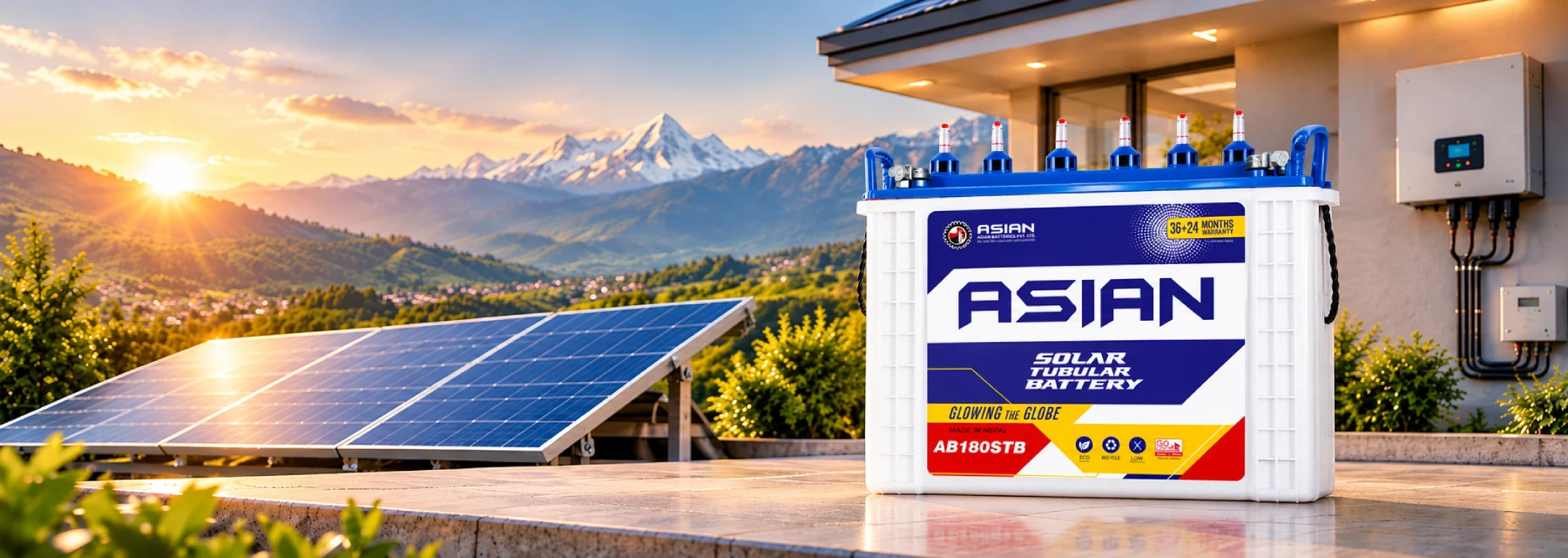
Is Tubular Battery Fit for Solar Applications?

24 September, 2026
2nd Annual General Meeting (AGM) Notice


Comments 0
Write a Comment