
How to Refill Water in Inverter Batteries?
- Battery Care |
- Asian Batteries |
- 13 October, 2026 |
- 3 views |
- 0 comments
An inverter battery is a widely used alternative in Nepal during power cuts. But like any other equipment, it needs regular care for good efficiency. One of the simplest yet most important maintenance tasks is maintaining the correct water level. If you are wondering how to refill inverter battery water, the process is quite simple, […]
Table of Content
An inverter battery is a widely used alternative in Nepal during power cuts. But like any other equipment, it needs regular care for good efficiency. One of the simplest yet most important maintenance tasks is maintaining the correct water level.
If you are wondering how to refill inverter battery water, the process is quite simple, but it needs to be done carefully and with the right type of water. Using ordinary tap water or overfilling the battery can affect its performance and lifespan.
Here’s a simple guide to help you understand the right way to do it.
Why Your Inverter Battery Water Level Matters
Most home inverters run on lead-acid batteries, either flat plate or tubular. Lead plates inside sit in an electrolyte that consists of sulphuric acid and water. Every time the battery charges, a little of that water splits into hydrogen and oxygen and escapes as gas. The acid stays behind.
If the battery water level drops below the plates, the exposed parts dry out and eventually the plates start degrading. The result? Shorter backup, slower charging and, eventually, a dead battery. Topping up with water simply restores the balance the battery needs to work at its best.
When to Refill Inverter Battery Water
There’s no fixed time duration for it, because it depends on how often you use the inverter, the weather, and your battery type. Normally, you should check the water every one to two months. In hot summers or when power-cut for longer duration, make it a monthly habit.
Your battery will also drop a few hints:
- The float indicator on top shows red or sits near the minimum mark.
- Your backup time feels shorter than usual.
- The battery feels warmer than normal while charging.
- It has been more than two months since your last water top-up.
Why Only Distilled Water for Battery Refills
This is the golden rule. Tap water, well water, rainwater, and even bottled drinking water carry minerals and salts. Inside a battery, these impurities coat the plates and degrade the performance of the battery, eventually leading to a shorter battery lifespan. Reverse Osmosis (RO) water is cleaner, but it is still not pure enough.
Always use distilled water for battery top-ups, often sold as “battery water” in sealed bottles. It doesn’t cost much and protects a battery that costs a lot. And never add acid; the battery only loses water, not acid.
How to Add Distilled Water to a Battery: Step by Step
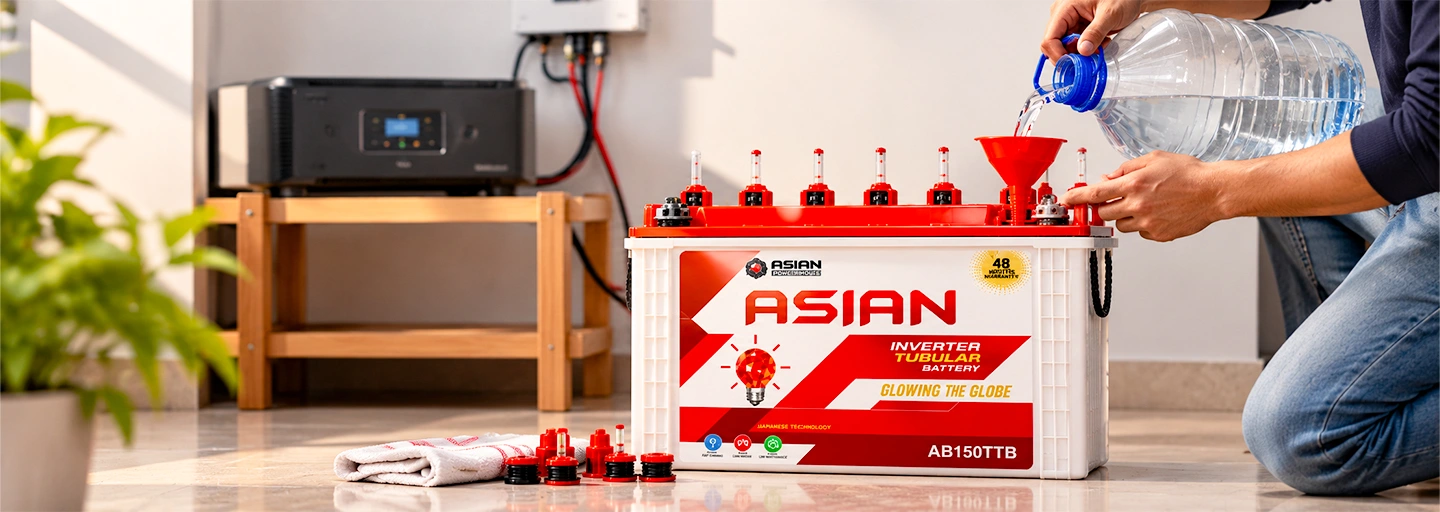
Keep these ready: a bottle of distilled water, a plastic funnel or battery filler, rubber gloves, safety glasses, a clean, dry cloth, and a torch. The best time for a battery water refill is right after the battery is fully charged, when the electrolyte level is at its true height.
- Switch off and unplug-Turn off the inverter, disconnect it from the mains, and let the battery cool for a few minutes.
- Gear up- Put on gloves and glasses. Battery acid can burn skin and damage eyes.
- Wipe the top clean- Remove dust with a dry cloth so nothing falls into the cells.
- Open the vent caps-Unscrew them one at a time and keep them somewhere clean.
- Check the level-Look at the float indicator, or use a torch to look inside each cell. The liquid should cover the battery plates.
- Pour slowly-Using the funnel, add distilled water until the float indicator turns green or the water level reaches the maximum mark. Stop there.
- Close up and restart. Tighten the caps, wipe any spills, reconnect the inverter, and switch it on.
The whole task usually takes less than 15 minutes.
Common Mistakes to Avoid
- Overfilling: Adding too much water can cause the electrolyte to spill or bubble out during charging, which may lead to corrosion around the terminals.
- Using tap or RO water: These may contain minerals and impurities that can build up inside the battery and affect its performance over time.
- Adding acid: Do not add acid during routine maintenance. Water evaporates, so topping up with distilled water is normally all that is needed.
- Keeping open flames nearby: Batteries can release hydrogen gas while charging, so keep matches, candles, cigarettes, and other flames away from the battery.
- Leaving the caps loose: Make sure the battery caps are properly secured after refilling to prevent dust from entering and electrolyte from spilling.
Quick Inverter Battery Maintenance Tips
Refilling the water is essential, but a few simple maintenance habits can also help keep your battery in good condition.
- Keep the battery in a shaded, well-ventilated spot, away from direct sunlight.
- Clean the terminals now and then and apply a thin layer of petroleum jelly to stop corrosion.
- Finally, note the date of every top-up on a sticker on the battery, so you never have to guess when it was last done.
Power Through Every Outage with Asian Battery
Looking for dependable batteries and expert guidance for your home or business? Asian Battery is here to help you find the right power-backup solution for your needs.
Contact Asian Battery today to learn more about our batteries, maintenance support, and power solutions. Keep your power backup ready when you need it most.
More Related Blogs
08 October, 2026
Is Tubular Battery Fit for Solar Applications?

24 September, 2026
2nd Annual General Meeting (AGM) Notice


Comments 0
Write a Comment