
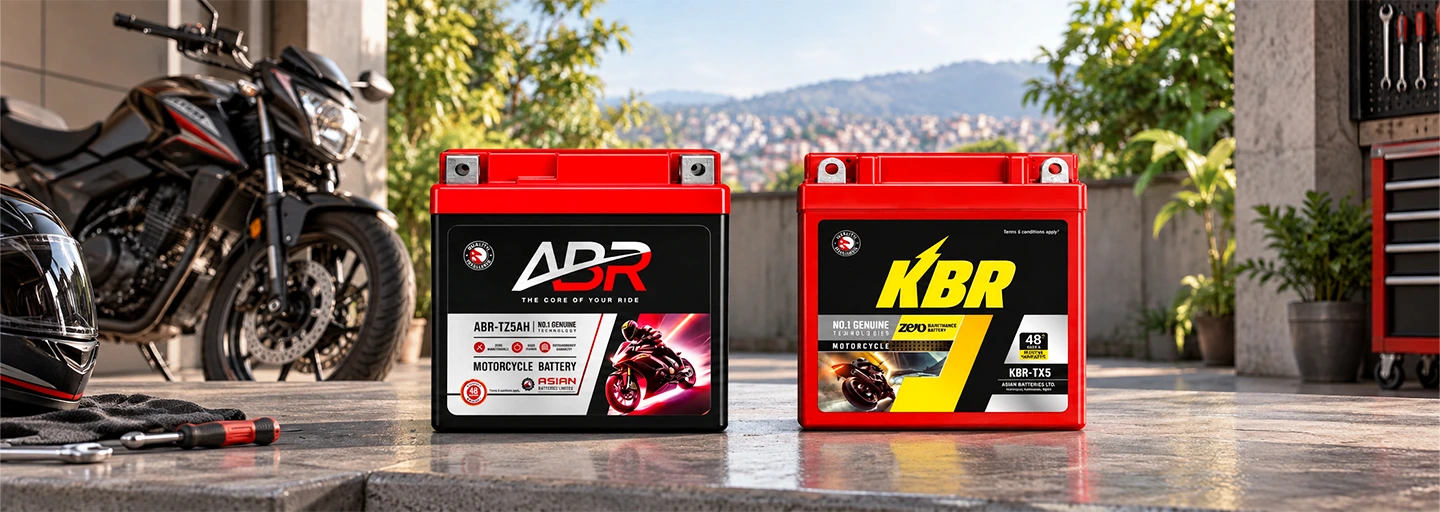
VRLA vs. Conventional Flooded Batteries for Bikes in Nepal: Which One Should You Choose?
- Battery Technology |
- Asian Batteries |
- 23 September, 2026 |
- 20 views |
- 0 comments
Batteries are essential components in the electrical systems of any vehicle, including motorcycle or scooter. They provide power to the bike’s electronics, engine ignition, and smooth operation of vehicles during everyday journeys. And having a reliable battery for a bike is important to ensure the bike and its electronic system function properly. The reliability of […]
Table of Content
- What IS A VRLA Battery, And How Does It Work?
- What Is a Conventional Flooded Battery, and How Does It Work?
- VRLA vs. Conventional Battery: Side-by-Side Comparison
- Performance in Nepal’s Real Conditions: Monsoon Humidity, Mountain Cold, and Rough Village Roads
- VRLA Battery
- Conventional Flooded Battery
- Which Battery Type Suits Which Rider?
- Total Cost of Ownership Over 3 Years: Flooded vs. VRLA
- Popular Bikes and Scooters in Nepal That Use VRLA Batteries
- Common myths: “VRLA is only for expensive bikes” debunked
- Conclusion
Batteries are essential components in the electrical systems of any vehicle, including motorcycle or scooter. They provide power to the bike’s electronics, engine ignition, and smooth operation of vehicles during everyday journeys. And having a reliable battery for a bike is important to ensure the bike and its electronic system function properly.
The reliability of a battery depends upon its build, type, size, and suitability. In Nepal, most of the two-wheeler batteries are VRLA and conventional flooded types. While these battery types are designed to perform the same basic function, their performance, reliability, convenience, and suitability differ according to riding condition. Understanding the difference in performance of VRLA vs. conventional batteries is important to ensure you choose the right battery type for your motorcycle or scooter. But which battery type to choose?
In this blog we explain the difference between VRLA and conventional flooded batteries for bikes in Nepal. The comparison between their performance, maintenance requirements, lifespan, price, spill risk, vibration tolerance, and installation flexibility is also provided.
What IS A VRLA Battery, And How Does It Work?
A VRLA refers to Valve-Regulated Lead Acid batteries that are sealed lead-acid batteries designed for minimizing the requirement of routine maintenance. These technologies are mostly used by automobile manufacturers in automobiles like motorcycles and scooters to minimize the requirement of periodic servicing and regular distilled water topping-up.
The VRLA battery uses an internal valve-regulated design that helps in reducing gas production during charging. Unlike conventional batteries, the VRLA battery is sealed, which is why it is leak-proof and ideal for use in automobiles.
Some of the key advantages of VRLA batteries include the following:
- Minimal routine maintenance
- Reduced risk of electrolyte spillage.
- Easy installation
- Good resistance to vibration
- Maintenance-free feature
- Low self-discharge
- Better power delivery for modern bikes and scooters
What Is a Conventional Flooded Battery, and How Does It Work?
A conventional flooded battery is a traditional lead-acid battery with liquid electrolyte surrounding the lead plates. This battery works through the chemical reaction between electrolyte and plates produce electrical energy to start the electrical system of the motorcycle or scooter.
Unlike the VRLA battery, the conventional flooded battery requires regular maintenance. Depending upon the usage and design, users must frequently top up the distilled water according to the requirements. While conventional batteries are popular due to their affordability and wide understanding by motorcycle owners or mechanics, they are becoming less common due to the hassle of frequent maintenance, spillage, and underperformance in extreme cold and hot temperatures.
VRLA vs. Conventional Battery: Side-by-Side Comparison
| Feature | VRLA Battery | Conventional Flooded Battery |
| Maintenance | Minimal routine maintenance | Requires periodic checking and maintenance |
| Lifespan | Depends on usage, charging, and conditions | Depends heavily on maintenance, usage, and charging |
| Price | Higher upfront price depending upon size and brands | Affordable than VRLA batteries |
| Spill Risk | Low risk of spill | Higher risk of spillage |
| Vibration Tolerance | Good tolerance to vibration when used in bikes and scooters | Lower vibration tolerance, with a greater risk of active-material shedding and structural or weld-related damage |
| Installation Flexibility | More flexible depending on manufacturer specifications | Usually requires appropriate upright positioning |
| Convenience | High | Requires proper care and periodic inspections |
Users must consider that the battery type is not just the factor that influences the performance of the battery. Factors like charging system, operating temperature, riding factor, and maintenance also impact the lifespan of the battery.
Performance in Nepal’s Real Conditions: Monsoon Humidity, Mountain Cold, and Rough Village Roads
When choosing a battery system for use on a bike or scooter in Nepal, it is important to consider the weather conditions, temperatures, and road conditions of Nepal. The changing condition of climate, weather, and road conditions of Nepal requires proper care and attention. Choosing between VRLA and conventional flooded batteries is important to ensure it supports bike riding during the diverse road and climatic conditions of Nepal.
VRLA Battery
VRLA batteries can be a convenient option for Nepal due to less electrolyte maintenance. The capacity to tolerate the heat and cold conditions of the VRLA battery in comparison to the conventional flooded battery further makes it ideal for use in the cold Himalayan and hot Terai regions of Nepal. Its vibration and spill-proof design also make it ideal for use on bumpy and gravel roads in the village roads of Nepal. VRLA batteries also provide installation flexibility due to their spill-proof design.
Conventional Flooded Battery
Conventional flooded batteries are also used in vehicles like bikes and scooters in Nepal. They perform effectively when maintained properly and within ideal operating temperatures. However, the conventional flooded battery requires proper attention regarding its electrolyte level and terminal conditions.
In humid conditions, due to the muddy road conditions of Nepal, the conventional flooded battery may build up corrosion or have problems in the terminal connection. To prevent this, owners are required to inspect and take care of the battery regularly. And on rough and uneven roads, the battery needs to be secured firmly to minimize the risk of spillage.
Which Battery Type Suits Which Rider?
The best battery for a bike depends upon the riding style, vehicle type, riding pattern, location, and capacity. Below is the simple comparison of suitable battery types for VRLA batteries for bikes and conventional flooded batteries for motorcycles:
| Rider Type | Considerations | Suitable Option |
| Daily City Commuter | For daily commuters and street riders, convenience is important. | VRLA can be convenient; conventional also works with regular maintenance. |
| Long-Distance Highway Rider | Temperature handling ability, less vibration, spill-proof design, and reliability are important. | VRLA batteries are sealed batteries providing protection from spills and have resistance to vibrations. This provides durability and reliability during long rides. |
| Rural and Hilly Terrain Rider | Rough roads, vibration, temperature changes, and limited servicing access | VRLA batteries are ideal, as they are maintenance-free and handle temperatures better than conventional flooded batteries. |
When replacing the battery for your motorcycle, a VRLA battery provides more reliability, convenience, and practicality to the owner. Also, changing batteries requires users to choose the battery that matches the capacity, voltage, size, and terminal configuration of the vehicle.
Total Cost of Ownership Over 3 Years: Flooded vs. VRLA
In terms of ownership cost over 3 years, a conventional flooded battery may have a lower upfront price in the beginning, but it may require periodic maintenance and cost for the addition of distilled water.
Meanwhile, a VRLA battery may cost more than a traditional flooded battery during the purchase. But in the long run, the battery required less routine maintenance and attention, making it an ideal battery providing a hassle-free experience to the users.
However, it is also important to consider that the battery’s performance, maintenance cost, and durability depend on usage, operation condition, and region.
Popular Bikes and Scooters in Nepal That Use VRLA Batteries
They are particularly suited to motorcycles and scooters with modern electrical systems, where dependable battery performance is important for starting, lighting, fuel injection, and other electrical components.
Several popular two-wheeler models available in Nepal are equipped with VRLA batteries, including models from Bajaj, Honda, KTM, TVS, and Royal Enfield. Some examples include:
- Bajaj: Pulsar 150, Pulsar NS200, and other Pulsar variants
- Honda: Dio BS6, Shine BS6, CB Unicorn and selected modern models
- KTM: Duke, RC, and Adventure series
- TVS: Apache series, Ntorq 125, and Raider
- Royal Enfield: Hunter 350 and Classic 350
Battery specifications can differ between models, variants, and model years, so it is important to check your vehicle’s recommended battery size and type before making a replacement.
Common myths: “VRLA is only for expensive bikes” debunked
Many riders believe that the “VRLA battery is only for expensive bikes. “But in fact, it is just a myth and is far from reality. VRLA technology is not just designed for premium bikes and other automobiles but is not preferred by automobile manufacturers in standard bikes due to its reliability, ability to handle vibration, spill-proof design, functionality, and maintenance-free design. Most importantly, VRLA may be expensive in comparison to conventional flooded batteries but is affordable in comparison to technologies like AGM, Lithium-Ion (LiFePO₄/NMC), and Gel VRLA.
Conclusion
Choosing between VRLA and conventional batteries depends upon your bike or scooter power requirements, riding environment, budget, and maintenance preference. While conventional flooded batteries are affordable, they require periodic maintenance. Its vibration and anti-spill capabilities are low, making it vulnerable in safety and reliability. Meanwhile, VRLA batteries are more costly than conventional batteries but are ideal for use in bikes and scooters in Nepal. Its low maintenance requirement, better vibration handling ability, and spill-proof design make it the ideal choice for roads and climatic conditions like those of Nepal.
If you are planning to purchase a reliable battery for your bike and scooter regardless of its brand, like Bajaj, KTM, Honda, Yamaha, or another popular brand in Nepal, visit Asian Batteries. Asian Batteries provides a variety of two-wheeler batteries for your bike and scooter for durable, reliable, and long-term performance with a 24-month warranty in Nepal.
More Related Blogs
08 October, 2026
Is Tubular Battery Fit for Solar Applications?

24 September, 2026
2nd Annual General Meeting (AGM) Notice


Comments 0
Write a Comment