
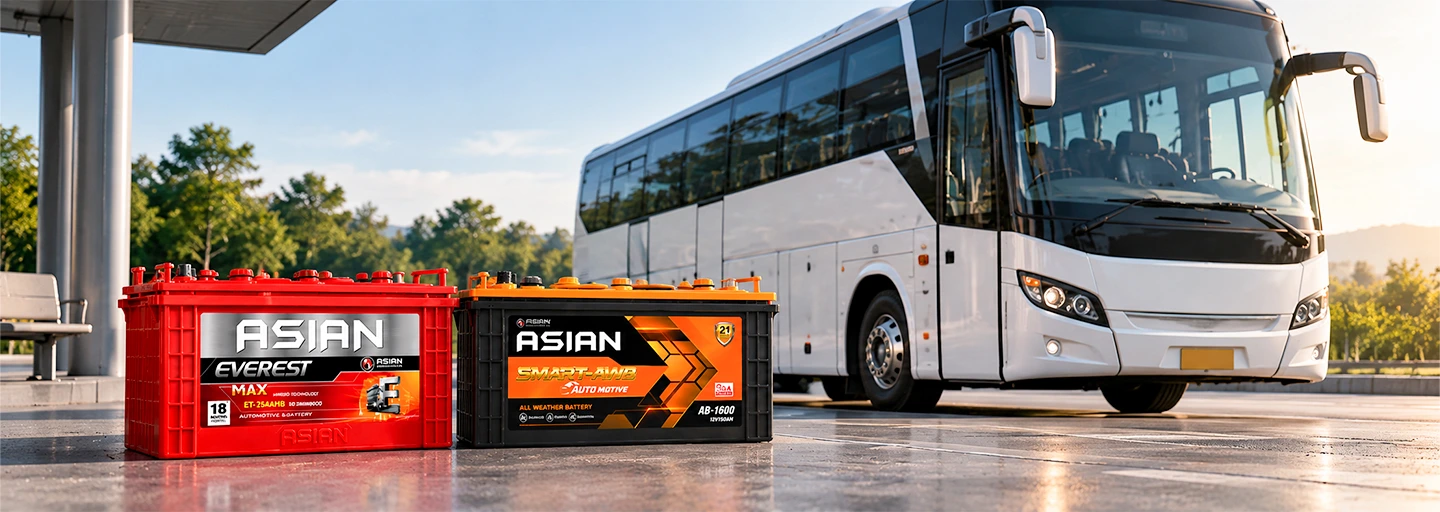
Why Heavy Duty Truck and Bus Batteries Fail Faster in Nepal: 6 Root Causes and How to Fix Them
- Battery Care |
- Asian Batteries |
- 15 September, 2026 |
- 17 views |
- 0 comments
Faster battery failure is stressful and causes a huge economic burden. You might burst with stress when a vehicle carrying passengers or heavy cargo refuses to start in the middle of a highway or remote route. This means lost hours, delayed deliveries, towing costs, and frustrated passengers. Heavy-duty batteries face some of the toughest operating […]
Faster battery failure is stressful and causes a huge economic burden. You might burst with stress when a vehicle carrying passengers or heavy cargo refuses to start in the middle of a highway or remote route. This means lost hours, delayed deliveries, towing costs, and frustrated passengers.
Heavy-duty batteries face some of the toughest operating conditions on Nepal’s roads. Nepal’s rough roads, long routes, traffic, temperature changes, and demanding vehicle operations can all shorten battery life. Understanding the actual causes of failure can help travel operators prevent problems before they become roadside emergencies.
1. Rough Roads and Excessive Vibration
Nepal’s highways include rough, uneven, and unpaved sections, particularly on challenging mountain routes. Constant vibration and sudden impacts can put significant physical stress on a battery. Over time, excessive vibration may loosen internal components, damage plates, weaken connections, and reduce the battery’s ability to hold a charge.
How to fix it: Use heavy-duty batteries designed to withstand vibration and make sure the battery is firmly secured with a suitable mounting system. Regularly inspect the battery tray, hold-downs, and terminals for looseness or damage.
2. Long Idling in Mountain Traffic
A truck or bus may spend long periods crawling through traffic or waiting on congested mountain roads. Although the engine is running, idling does not always provide the same charging output as normal driving. At low engine speeds, the alternator may produce less power while lights, fans, air conditioning, entertainment systems, and other electrical equipment continue drawing energy. If this happens repeatedly, the battery may remain undercharged.
How to fix it: Check the charging system regularly and measure alternator output rather than assuming a running engine means the battery is fully charging. A charging-system inspection can identify problems before they leave the vehicle stranded.
3. Heavy Loads and Vehicle Strain
Overloading a truck or bus puts additional strain on the engine, starter system, and overall vehicle. Starting a heavily loaded vehicle, especially on steep roads, can place greater demands on the starting system. If the battery is already weak, repeated high-demand starts can expose the problem quickly. Additional electrical accessories used by commercial vehicles can also increase the overall electrical load.
How to fix it: Keep vehicles within their recommended load limits and use a battery and charging system suited to the vehicle’s actual operating conditions.
4. Nepal’s Temperature Extremes
A battery operating in the cold hills faces very different conditions from one working in the hot Terai. Cold temperatures can reduce a battery’s ability to deliver starting power, making engine starts harder. On the other hand, excessive heat can accelerate battery ageing, increase water loss in conventional batteries, and shorten internal component life.
How to fix it: Choose a battery appropriate for the vehicle and operating environment. Regular inspections become especially important when vehicles travel between Nepal’s colder highlands and hotter lowlands.
5. Poor Dual-Battery Management
Many heavy-duty trucks and buses use two batteries to meet their starting and electrical requirements. However, simply connecting two batteries does not guarantee a healthy system. If batteries have different ages, capacities, or states of charge, they may charge and discharge unevenly. A weak battery can affect the performance of the complete battery bank.
How to fix it: When replacing batteries in a dual-battery setup, use properly matched batteries and inspect the cables, terminals, and connections. Test the complete system rather than checking only one battery.
6. Replacing the Battery Too Late
A weak battery often gives warning signs before complete failure: slower engine cranking, repeated jump-starts, dimming lights, or difficulty starting in cold weather. Continuing to operate with a failing battery increases the risk of an unexpected breakdown and can place unnecessary strain on the starter and charging system.
How to fix it: Use regular battery testing, including load testing, to identify declining performance before failure.
Conclusion
For travel operators, waiting for a battery to fail can be expensive. Keep records of each battery’s installation date, test results, vehicle route, and starting performance. Schedule inspections before periods of heavy travel and replace batteries that consistently show poor test results. Smart charging-system checks, secure vibration-resistant mounts, clean and tight terminals, and regular load testing can significantly reduce unexpected failures.
For trucks and buses operating across Nepal, the right battery is also important. Asian Batteries offers heavy-duty battery solutions suited to demanding commercial vehicles and Nepal’s varied road and weather conditions. Choose the right battery, maintain it properly, and reduce the chances of your next breakdown happening far from the workshop.
More Related Blogs

08 October, 2026
Is Tubular Battery Fit for Solar Applications?

24 September, 2026
2nd Annual General Meeting (AGM) Notice


Comments 0
Write a Comment