
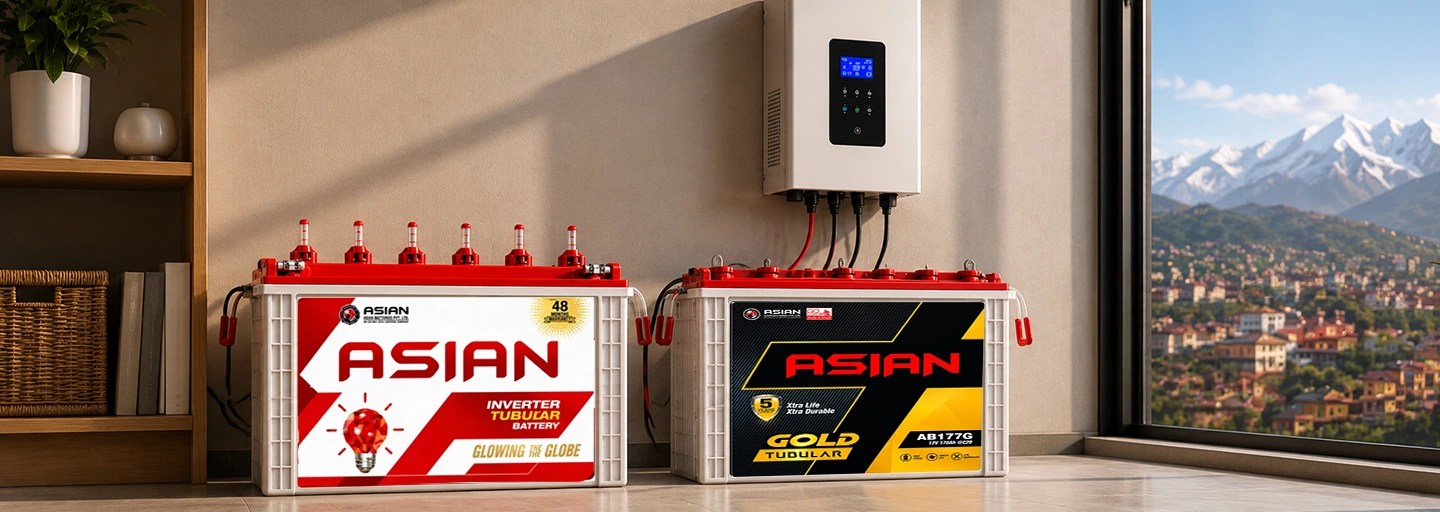
How Long Should An Inverter Battery Last In Nepal? Signs It’s Time To Replace Yours
- Inverter Batteries |
- Asian Batteries |
- 7 August, 2026 |
- 51 views |
- 0 comments
The inverter battery is the major component that stores energy and supplies it when required. It is a critical component requiring periodic checks and timely maintenance, and a suitable battery ensures long lifespan and performance. In a country like Nepal, a durable, suitable, and performative inverter battery is important to face frequent power outages, harsher […]
Table of Content
The inverter battery is the major component that stores energy and supplies it when required. It is a critical component requiring periodic checks and timely maintenance, and a suitable battery ensures long lifespan and performance. In a country like Nepal, a durable, suitable, and performative inverter battery is important to face frequent power outages, harsher climate, and power fluctuations. Users in Nepal usually have one common question: how long does an inverter battery last in Nepal? The answer depends upon usage, location, maintenance requirements, and type of battery used.
In this blog, we provide information about the average lifespan of inverter batteries in Nepal. The factors affecting its performance, signs of failure, and appropriate time to replace them are also provided.
Inverter Battery Lifespan In Nepal
The inverter battery’s lifespan depends upon usage condition, battery type, maintenance and care, and the climatic condition of the place where the inverter battery setup is done. From most home and business applications, a properly maintained inverter battery lasts for 3 to 6 years. However, batteries installed in extreme temperature conditions and without proper maintenance experience early failure and issues.
The average life span of inverter batteries by their battery type is mentioned below:
Flat-plate inverter batteries
The flat-plate inverter batteries are power backup units that feature grids and two-dimensional plates, making them economic options for short power cuts and lightweight backup. These battery systems are commonly used in homes and are one of the most affordable technologies for occasional power outages. The flat-plate inverter batteries have an average lifespan of 3 to 4 years because of their thinner plate construction and faster degradation of chemical when used frequently. The batteries have a lower charge cycle of around 300 to 500 cycles.
Tubular Batteries
The tubular inverter batteries are heavy-duty backup solutions that use three-dimensional, tube-shaped positive plates with active chemical materials. Tubular inverter batteries are engineered to handle deep discharge cycles, handle extreme temperature conditions in Nepal, and handle frequent power cuts without requiring frequent repairs. When compared to flat-plate inverter batteries, the tubular inverter batteries last longer, with an average lifespan of 5 to 7 or more years. It is because of its heat dissipation capacity, high acid volume, high resistance to short-circuit, and design for a longer charge cycle.
Factors That Shorten Battery Life
Every battery, regardless of type and quality, has a limited life as it wears and degrades within a time limit. While the battery durability and lifespan are determined by usage condition, battery type, frequent maintenance, and suitability, some practices and factors severely help in degrading the life of existing batteries. Some of the factors that shorten battery life include the following:
- High operating temperatures that lead to quick chemical deteriorations
- Deep discharge due to using a battery below recommended levels
- Overcharging the battery leads to chemical destruction and heat generation
- Using faulty inverter types and chargers for charging the battery
- Undercharging the battery led to sulphation and reduced battery capacity
- Lack of proper regular maintenance and care
- Using inappropriate battery type and size
- Poor ventilation that impacts the battery’s overall performance.
Warning Signs It’s Time to Replace Your Battery
No matter if you are using flat-plate batteries or advanced tubular batteries for inverter backup, when the battery life is going to end, it gives warning signs that include:
- Shorter backup time: Your inverter batteries give shorter battery backup, although they are charged for adequate time. Low battery backup when using normally indicates your battery condition is poor and you may require replacement.
- Water loss: If you require frequent water top-ups more than the scheduled interval in normal usage conditions, that can be a sign of internal damage. Such conditions indicate the need for battery replacement.
- Bulging or swollen case: In situations where you observe the battery case being bulged or swollen, it can be due to internal damage. This issue can be serious and concerning, which indicates an immediate requirement for battery replacement.
- Frequent low-voltage beeps: If your inverter system beeps frequently with low-voltage beeps when using the battery normally, even for a short time period, it indicates the battery has lost its ability to provide sufficient backup. This is one of the important signs that the battery is not able to give required backup and needs replacements.
- Sudden shutdowns: If your inverter system shuts down without any warning in normal load, it indicates the battery is damaged and requires replacements.
Cost Of Delaying Replacement: Inverter Damage And Safety Risks
In a situation when a replacement need for inverter batteries is identified, it is important to replace it within time to prevent inverter damage and safety risks. It is because a damaged inverter system may demand higher charging currents, leading to overheating and burning of inverter circuit boards.
Also, the damaged or corroded components and acid fumes may damage battery terminals and metal casing. Such issues may increase the severe risk of explosion hazards, toxic chemical burns, respiratory damage, and fire hazards due to electrical fires and short circuits.
How to dispose of your old battery responsibly in Nepal
Disposing of your old damaged battery in Nepal must be done in an environmentally friendly and safe manner. As the battery system contains hazardous materials, disposing randomly can lead to severe safety and environmental hazards. The best way to dispose the old used battery, ensuring safety in Nepal, includes the following:
- Returning it to the authorized distributor or dealer.
- Exchanging batteries when purchasing a new one so that the manufacturer can recycle the battery.
- Selling used battery to recycling facilities
- Avoiding dumping batteries directly in regular waste
Conclusion
The average lifespan of inverter batteries in Nepal depends upon their type and maintenance and their usage pattern. While flat-plate batteries are known for affordability, tubular inverter batteries are known for durability and best value for the long term, as they provide the best battery performance with minimal maintenance needs. And when your inverter battery is showing signs of degradation, it is important to consider timely replacement to prevent damage to the inverter system and severe health risks. Also, during battery replacement, one must consider proper disposal of old batteries to prevent environmental and safety hazards.
Planning to buy the best tubular batteries for your inverter system in Nepal? Visit Asian Batteries for durable tubular batteries for home, office, or business use. Asian Batteries ensures tubular batteries are made to handle usage conditions of Nepal and provides long term durability with minimal maintenance.
More Related Blogs
13 October, 2026
How to Refill Water in Inverter Batteries?
08 October, 2026
Is Tubular Battery Fit for Solar Applications?

24 September, 2026
2nd Annual General Meeting (AGM) Notice



Comments 0
Write a Comment