
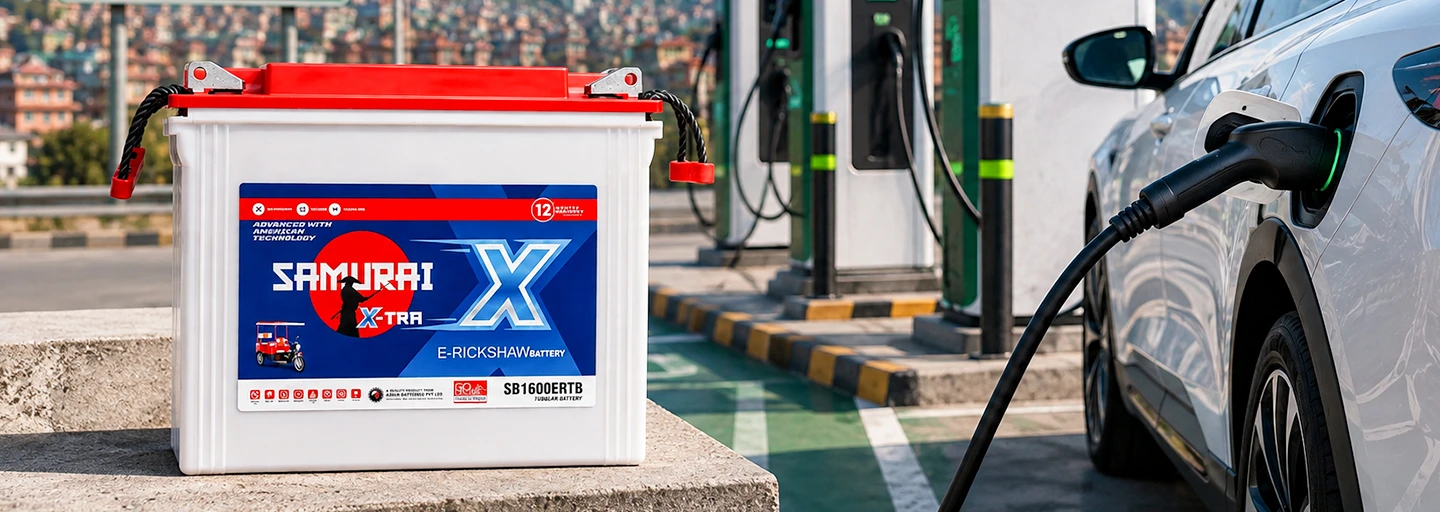
Nepal’s EV Charging Infrastructure: Current Status and What It Means for Battery Owners
- Nepal Energy |
- Asian Batteries |
- 14 August, 2026 |
- 51 views |
- 0 comments
The use of electric vehicles is growing in Nepal. Environment-friendly and cost-cutting on high-priced petroleum products are making it popular. But enough charging infrastructure is important to ensure its convenience. Kathmandu has the highest number of charging stations, featuring dozens of AC and DC fast public chargers. Charging infrastructure is also available in other major […]
Table of Content
- Nepal’s EV Charging Infrastructure: Current Status
- Where Can EV Owners Charge Their Vehicles in Nepal?
- 1. Home Charging
- 2. Public Charging Stations
- 3. Highway and Fast-Charging Stations
- How Does Charging Infrastructure Affect EV Battery Owners?
- What Should EV Owners Know About EV Battery Charging?
- How Can Battery Owners Prepare for Better EV Ownership?
- Conclusion
The use of electric vehicles is growing in Nepal. Environment-friendly and cost-cutting on high-priced petroleum products are making it popular. But enough charging infrastructure is important to ensure its convenience.
Kathmandu has the highest number of charging stations, featuring dozens of AC and DC fast public chargers. Charging infrastructure is also available in other major cities like Chitwan, Pokhara, Butwal, and more. There are also a few charging stations on major highways. There are very few in other parts of Nepal. Nepal has a hilly landscape, making charging stations most important outside cities on hilly terrain.
The number of charging stations is growing, but it has uneven distribution. In this blog, you will learn about the current status of charging infrastructure, how it affects battery owners, and what they should do.
Nepal’s EV Charging Infrastructure: Current Status
As of mid-2026, Nepal has approximately 1,000 to 1,511 operational EV charging infrastructure points across the country. They are installed by the Nepal Electricity Authority and private companies. The Nepal government has set a target to expand Nepal’s charging network to at least 10,000 charging stations by 2030, tenfold of currently operating charging stations.
The present distribution of charging stations in Nepal is listed as follows;
| Geographic / Place Category | Estimated Share / Units | Key Locations & Covered Hubs | Operational Readiness |
| Kathmandu Valley (Capital Hub) | ~40% – 45% of all points | Kathmandu, Lalitpur, Bhaktapur, Kalanki, Balkhu, Pulchowk, Jawalakhel | Highly Adequate: Charging hubs at dealerships, hotels, and public spots. |
| Central Transit & Tourism Hubs | ~25% of all points | Pokhara, Bharatpur (Chitwan), Hetauda, Butwal, Muglin-Kurintar | Adequate / Rapidly Growing: High density due to heavy tourist and commercial EV traffic. |
| Major Highways (Corridors) | Spaced every 25 to 60 km | Prithvi Highway, East-West Highway segments, BP Highway | Moderately Reliable: Supported by NEA fast-charging hubs and private networks. |
| Eastern Terai Region | ~15% of all points | Biratnagar, Itahari, Damak, Jhapa, Janakpur, Birgunj | Improving: Steady expansion along commercial border cities and the East-West stretch. |
| Western, Mid-Western & Rural | < 10% of all points | Kohalpur, Nepalgunj, Surkhet, Attariya, Baitadi Bazaar | Sparse / Limited: Long-distance traveling off primary highways requires precise battery planning. |
Charging infrastructure is not yet evenly distributed across the country. Popular routes and developed areas tend to have better access, while remote destinations may have fewer options. This means EV owners still need to consider charging availability when planning longer journeys.
Where Can EV Owners Charge Their Vehicles in Nepal?
1. Home Charging
For many EV owners, home charging is the most convenient option. You can plug in your vehicle after returning home and charge it overnight. Home charging is especially useful for people who use their EV mainly for daily commuting. Instead of waiting at a public station, you can start the day with a charged battery.
However, your home electrical setup should be suitable for the charger you use. It is always better to follow the vehicle manufacturer’s recommendations and have the charging equipment installed properly.
2. Public Charging Stations
Public charging stations are useful when you are travelling, live in a place without suitable home charging, or need to charge your vehicle during the day. You can find charging facilities in different commercial and service locations. As more EVs enter the market, the demand for these stations is also increasing.
Before travelling, it is a good idea to check where charging stations are available along your route. This can save you from unnecessary delays, especially on longer journeys.
3. Highway and Fast-Charging Stations
Fast chargers are particularly important for EV owners travelling between cities. The expansion of charging stations along major highways is helping make long-distance EV travel more practical in Nepal. Still, charging availability can be limited on less-travelled routes, so proper planning remains important.
How Does Charging Infrastructure Affect EV Battery Owners?
The availability of charging stations directly affects how convenient it is to own an EV. A wider charging network means you have more options when your battery needs charging. It also helps reduce range anxiety, which is the concern about running out of battery before reaching a charging point.
But charging infrastructure is only one part of battery ownership. The way you charge your battery also matters. Using compatible charging equipment and following the manufacturer’s charging recommendations can help maintain battery performance over time.
For long-distance travel, knowing where to charge allows you to avoid unnecessarily draining the battery.
What Should EV Owners Know About EV Battery Charging?
Good charging habits help you get consistent performance from your battery. First, use charging equipment that is compatible with your vehicle. Avoid using unreliable or unsuitable charging equipment simply because it is available. Fast charging is convenient, especially during road trips, but you do not necessarily need to use it for every charging session. For regular charging, follow the charging method recommended for your vehicle.
It is also important to pay attention to the battery level and don’t always keep it extremely low. Your vehicle’s battery management system is designed to protect the battery, but following the manufacturer’s recommended charging practices is still important. If you notice unusual heating, a sudden change in charging time, or a noticeable drop in battery performance, it is better to have the vehicle checked rather than ignoring the issue.
How Can Battery Owners Prepare for Better EV Ownership?
EV owners can make their experience easier by understanding their vehicle’s battery and charging requirements. Choose a charging setup that suits your daily driving habits and follow the manufacturer’s recommendations.
For long trips, check charging locations in advance and avoid depending on a single charging point. Regularly monitor your battery’s performance and get professional assistance if you notice unusual changes.
Most importantly, choose reliable batteries and related products from a trusted supplier. Asian Battery provides battery solutions with a focus on quality and reliability, helping vehicle owners make informed choices for their energy needs.
Conclusion
Nepal’s EV charging infrastructure is growing, and this is an important step toward wider electric vehicle adoption. Although charging stations are still more concentrated in cities and major travel routes, the expanding network is making EV ownership increasingly convenient.
For battery owners, charging availability, proper charging habits, and battery care all work together. As Nepal continues to develop its EV infrastructure, having a reliable battery and following the right charging practices can help you get more from your electric vehicle. Choose Asian Battery for high-capacity EV batteries.
More Related Blogs

13 October, 2026
How to Refill Water in Inverter Batteries?
08 October, 2026
Is Tubular Battery Fit for Solar Applications?

24 September, 2026
2nd Annual General Meeting (AGM) Notice



Comments 0
Write a Comment