
Dual Battery Systems in Heavy Trucks and Buses in Nepal: How They Work and How to Maintain Them
- Battery Technology |
- Asian Batteries |
- 24 August, 2026 |
- 35 views |
- 0 comments
Heavy trucks and buses do more heavy work than any other vehicles. They carry heavy loads, travel long distances, face steep mountain roads, and often run electrical equipment for hours. That is why many heavy-duty vehicles in Nepal use a dual battery system. Two batteries do not automatically mean better performance. The batteries need to […]
Table of Content
- Why Do Heavy Trucks and Buses Need Two Batteries?
- How Is a Dual Battery System Wired?
- The Most Common Dual Battery Problem: Mismatched Batteries
- What Happens When One Battery Fails?
- How to Test Batteries in a Dual Setup
- Should You Replace One Battery or Both?
- Choosing the Right Battery for Nepal’s Roads
- Conclusion
Heavy trucks and buses do more heavy work than any other vehicles. They carry heavy loads, travel long distances, face steep mountain roads, and often run electrical equipment for hours. That is why many heavy-duty vehicles in Nepal use a dual battery system.
Two batteries do not automatically mean better performance. The batteries need to be correctly matched, properly wired, and regularly maintained. A weak or mismatched battery can affect the entire system and leave a truck or bus struggling to start.
Why Do Heavy Trucks and Buses Need Two Batteries?
Starting a heavy diesel engine requires a large amount of electrical power. The starter motor needs high current to turn the engine, especially during cold starts or after the vehicle has been parked for a long time.
At the same time, heavy vehicles may power headlights, air conditioning, horns, entertainment systems, GPS units, refrigeration equipment, and other electrical accessories. A dual battery setup provides extra starting power and electrical capacity, helping the vehicle handle these demanding loads more reliably.
How Is a Dual Battery System Wired?
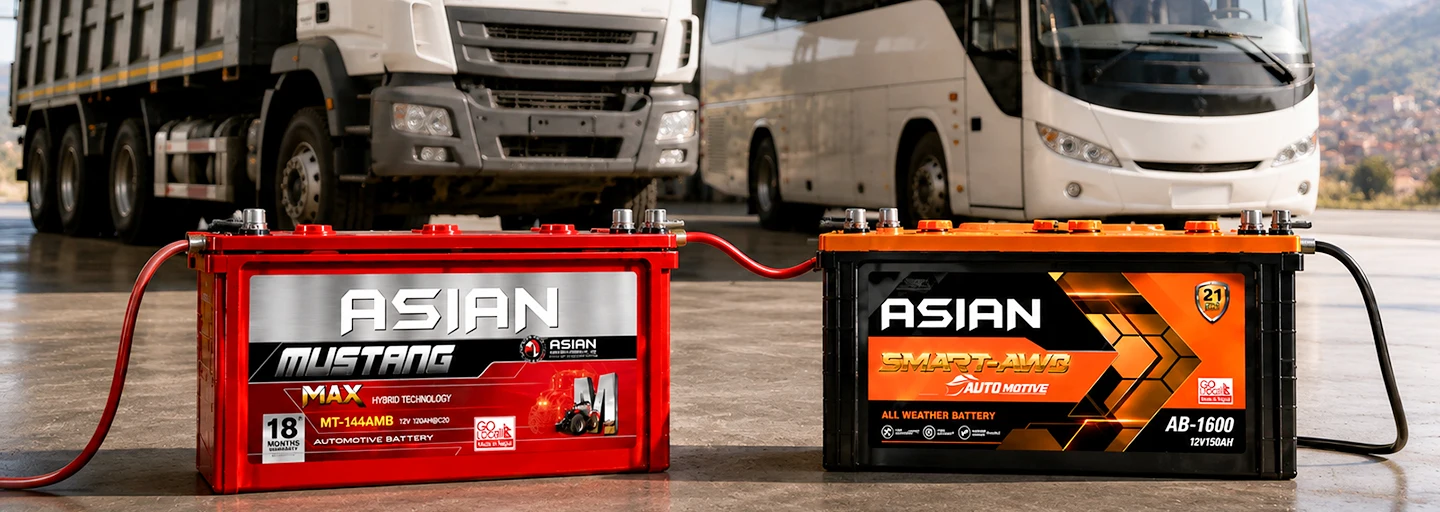
In many heavy vehicles, the two batteries are connected in parallel. This means the positive terminals are connected together, and the negative terminals are also connected together.
The voltage generally remains the same, while the available capacity and starting current increase. For example, two compatible 12V batteries connected in parallel still provide a 12V system, but together they can supply more current.
Some vehicles also use a battery isolator or similar control device. This can help manage charging and prevent auxiliary electrical loads from completely draining the starting battery.The key point is simple: the two batteries need to work as a balanced pair.
The Most Common Dual Battery Problem: Mismatched Batteries
One of the biggest mistakes operators make is replacing only one battery with whatever is available. For example, a truck may have one older battery from one brand and a newer battery with a different capacity from another brand. Although the system may continue working, the batteries will not necessarily charge and discharge at the same rate.
An older or weaker battery can make the newer battery work harder. Over time, this can reduce overall battery performance and shorten the service life of both batteries.
What Happens When One Battery Fails?
When batteries are connected in parallel, they work together. If one battery becomes weak, internally damaged, or develops excessive resistance, it can affect the performance of the other battery. Instead of providing balanced power, the stronger battery may continuously compensate for the weaker one. This can lead to poor starting performance, slower recovery after starting, and repeated battery discharge. In severe cases, the vehicle may suddenly fail to start even though one battery still appears healthy. That is why testing each battery separately is important when diagnosing a dual battery problem.
How to Test Batteries in a Dual Setup
You do not always need to completely remove the entire battery system for an initial diagnosis. A technician can inspect the batteries individually by safely isolating them from each other and testing them separately. A proper battery check should include:
- Resting voltage
- Cold Cranking Amps (CCA)
- Battery condition and physical damage
- Terminal connections and corrosion
- Charging voltage from the alternator
- Signs of leakage, swelling, or overheating
Testing both batteries individually helps identify whether one battery is weaker or whether both need replacement.
Should You Replace One Battery or Both?
If one battery fails while the other is relatively new and has been used for a short period, replacing only the faulty battery may sometimes be appropriate after proper testing. However, if both batteries have similar age or usage, replacing them together is generally the better practice.
Always choose batteries with matching specifications, including voltage, ampere-hour (Ah) capacity, cold cranking amps (CCA), physical size, and suitable construction for the vehicle. Ideally, use the same brand and model as a matched pair.
Choosing the Right Battery for Nepal’s Roads
The right battery rating depends on the vehicle, engine size, electrical load, and route conditions. For long Terai routes, heavy trucks and buses may generally need 120–180 Ah with around 800–1,000 CCA per battery. For mountain landscapes, a 150–200 Ah battery with 900–1,100+ CCA per battery can provide stronger starting performance in colder, demanding conditions.
However, these are general recommendations. Always follow the vehicle manufacturer’s specified Ah and CCA ratings and use two batteries with matching specifications, preferably the same brand and model.
Conclusion
In a dual battery system, one weak battery can affect the performance of the entire system. Regular inspection, clean terminals, proper charging, and matched batteries can prevent many starting problems and unnecessary breakdowns.
If your truck or bus needs a reliable battery replacement, Asian Batteries supplies matched dual-battery sets for heavy trucks, buses, and other commercial vehicles across Nepal. Choose the right battery for your vehicle and keep your journey moving.
More Related Blogs
13 October, 2026
How to Refill Water in Inverter Batteries?

08 October, 2026
Is Tubular Battery Fit for Solar Applications?

24 September, 2026
2nd Annual General Meeting (AGM) Notice



Comments 0
Write a Comment