
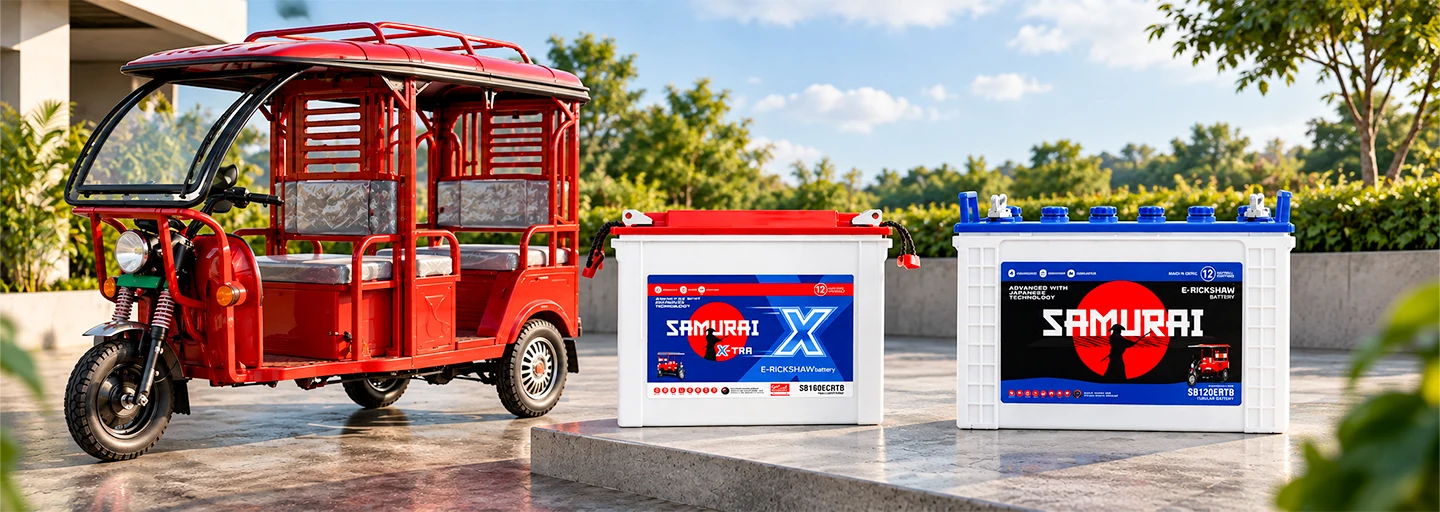
Deep-Cycle Batteries Explained: Why They Are the Backbone of Electric Rickshaws in Nepal
- Electric Vehicles |
- Asian Batteries |
- 8 September, 2026 |
- 26 views |
- 0 comments
Electric rickshaws have become part of everyday life in Nepal’s Terai region. For most of the population, the e-rickshaw is a regular daily mode of transportation. They are also an important source of income for drivers who depend on them for their livelihood. It offers low-cost operation because it runs on electricity. But there is […]
Table of Content
- What Is a Deep-Cycle Battery?
- Deep-Cycle vs. Starter Battery
- Why Deep-Cycle Batteries Suit E-Rickshaws
- Why Tubular Batteries Are Popular in Nepal
- Understanding Battery Cycle Life
- How to Make Your Battery Last Longer
- What to Look for When Buying a Deep-Cycle Battery
- Choose the Right Battery for Your E-Rickshaw
Electric rickshaws have become part of everyday life in Nepal’s Terai region. For most of the population, the e-rickshaw is a regular daily mode of transportation. They are also an important source of income for drivers who depend on them for their livelihood. It offers low-cost operation because it runs on electricity.
But there is one major part of an e-rickshaw that directly affects how long it can stay on the road: the battery. Because e-rickshaws spend long hours on the road, their batteries must handle frequent use, regular charging, and repeated discharge. So, it requires a different battery from a car battery. This is where a deep cycle battery comes in. It is designed to provide steady power over longer periods and withstand repeated charging and discharging, making it well suited for the everyday demands of an electric rickshaw.
In this blog, you will learn in detail about deep-cycle batteries, understand the difference between deep-cycle and starter batteries, why a deep-cycle battery suits e-rickshaws, and how to choose a good deep-cycle battery for e-rickshaws.
What Is a Deep-Cycle Battery?
A deep-cycle battery is a rechargeable battery built to provide steady, continuous power over long periods of time. Unlike a standard car battery that gives a quick burst of energy just to start an engine, a deep-cycle battery is designed to release its power slowly and be safely drained nearly empty before being recharged.
Its durability comes from the battery’s internal design, which uses extra-thick, heavy lead plates instead of the thin ones found in regular cars. These thick plates are hardened by mixing a metalloid, antimony, into the lead, making them tough enough to survive the intense chemical stress of daily draining and recharging. This mixture keeps the plates from bending, breaking, or losing power over time. Because it can withstand the heat and rough roads of the Terai region, this tough design ensures that local drivers can reliably run their electric rickshaws all day without their power source breaking down.
Deep-Cycle vs. Starter Battery
The easiest way to understand a deep-cycle battery is to compare it to a standard car battery:
| Feature | Car Starter Battery | Deep Cycle Battery |
| Main Job | Delivers a single, massive burst of power to start an engine. | Delivers low, steady power for hours or days. |
| Draining Energy | Damaged if you drain its energy completely. | Built to be drained nearly empty over and over. |
| Internal Design | Uses many thin plates to release electricity instantly. | Uses fewer, much thicker plates to store and release energy slowly. |
Why Deep-Cycle Batteries Suit E-Rickshaws
An e-rickshaw usually runs for several hours a day, carrying passengers and making many short trips. This means the battery is used again and again throughout the day. A deep-cycle battery is made for this type of regular use. It can provide power for a longer time and can be charged and used repeatedly without wearing out quickly.
However, this does not mean you should completely drain the battery every day. Deep-cycle batteries also last longer when they are not regularly run down to zero. Using the battery properly and charging it at the right time can help improve its performance and lifespan.
Why Tubular Batteries Are Popular in Nepal
Tubular EV batteries are a popular choice for e-rickshaws in Nepal because they offer a good balance of price, performance, and durability. They can handle regular charging and discharging, which is important for e-rickshaws that run for several hours every day.
Lithium-ion batteries can be lighter and last longer, but they usually cost more. Flat-plate batteries may be cheaper, but they may not be as suitable for regular heavy use. Tubular batteries offer a middle ground. They provide steady power, are suitable for daily use and are also easier to find and replace in Nepal. For drivers who depend on their e-rickshaw for their daily income, this makes tubular batteries a practical option.
Understanding Battery Cycle Life
You may come across the term “cycle life” when comparing batteries. But what does a cycle actually mean?
In simple terms, one battery cycle means using the battery’s full capacity over time and then recharging it. You may also see a cycle life such as 1,200 cycles. A cycle means using the battery’s full capacity over time and then recharging it. For example, if you use 50% of the battery today and recharge it, then use the remaining 50% later, that is roughly one full cycle.
So, a battery rated for 1,200 cycles does not mean it will last for exactly 1,200 days or charges. Its actual life depends on how deeply you discharge it, how you charge it, the temperature and how well you maintain it. Proper charging and regular maintenance can help the battery last longer.
How to Make Your Battery Last Longer
Good charging habits can make a battery go a long way. Use the charger recommended for your battery and avoid leaving the battery discharged for long periods. Regular overcharging should also be avoided. If you are using a flooded tubular battery, check the electrolyte level as recommended by the manufacturer. Keeping the terminals clean and making sure the battery is properly installed can also help.Small maintenance habits may seem unimportant, but they can make a difference over the working life of an e-rickshaw battery.
What to Look for When Buying a Deep-Cycle Battery
Choosing a battery should not be based on price alone. Start by checking whether its voltage and Ah (amp-hour) capacity match your e-rickshaw’s requirements. You should also look at the battery type, expected cycle life, size, warranty and after-sales support. A battery that does not match the vehicle’s electrical system may not perform as expected, even if it is otherwise a good battery. It is also worth choosing a brand with dependable service and replacement options available locally. This can save you trouble later if you need support or a replacement.
Choose the Right Battery for Your E-Rickshaw
For an electric rickshaw, the battery is more than just another component. It directly affects how long you can work, how often you need to charge and how much you may spend on replacements.
If you are looking for a deep-cycle battery in Nepal, explore the deep-cycle range from Asian Batteries. Choose the right battery for your e-rickshaw and get dependable power for your everyday work.
More Related Blogs
13 October, 2026
How to Refill Water in Inverter Batteries?
08 October, 2026
Is Tubular Battery Fit for Solar Applications?

24 September, 2026
2nd Annual General Meeting (AGM) Notice



Comments 0
Write a Comment