
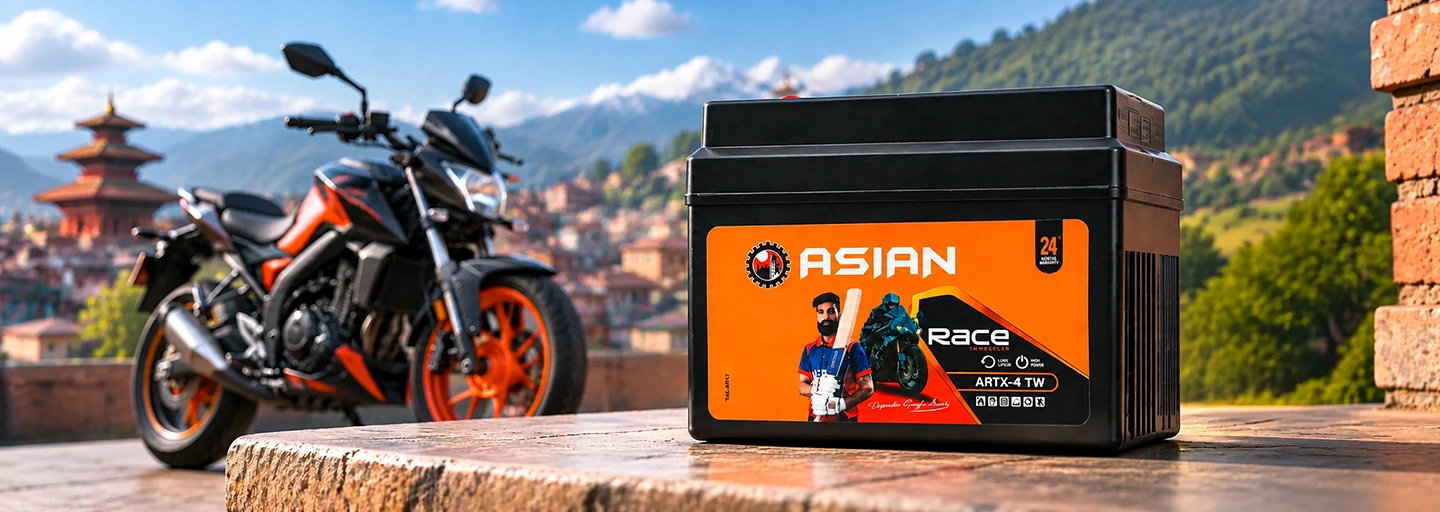
How Long Does a VRLA Motorcycle Battery Last in Nepal? Factors That Affect Lifespan
- Battery Care |
- Asian Batteries |
- 16 November, 2026 |
- 3 views |
- 0 comments
VRLA (Valve Regulated Lead Acid) batteries are sealed, spill-proof, completely maintenance-free, and deliver strong, consistent electrical performance. However, they are not designed to last indefinitely. They typically last 2 to 4 years; however, poor maintenance can even lead to battery replacement within just a few months. It depends on your riding habits, charging conditions, road […]
Table of Content
- Average VRLA Battery Lifespan for Two-Wheelers in Nepal
- 5 Factors That Affect VRLA Motorcycle Battery Lifespan
- 1. Riding Frequency: Why Leaving Your Bike Unused Can Damage the Battery
- 2. Charging Habits: How a Faulty Rectifier Can Damage a VRLA Battery
- 3. Nepal’s Temperature Extremes: Cold at Altitude vs. Heat in the Terai
- 4. Road Vibration: How Hilly and Off-Road Terrain Affects Battery Life
- 5. Electrical Load: How Extra Accessories Drain Your VRLA Battery
- When to Replace: Warning Signs Your VRLA Motorcycle Battery Is Failing
- Choose a Reliable VRLA Motorcycle Battery from Asian Batteries
VRLA (Valve Regulated Lead Acid) batteries are sealed, spill-proof, completely maintenance-free, and deliver strong, consistent electrical performance. However, they are not designed to last indefinitely. They typically last 2 to 4 years; however, poor maintenance can even lead to battery replacement within just a few months. It depends on your riding habits, charging conditions, road quality, and Nepal’s changing climate.
This blog will help you understand the factors that affect the lifespan of batteries. Knowing this helps you take better care of your batteries, avoid unexpected starting problems, and get better value from your investment.
Average VRLA Battery Lifespan for Two-Wheelers in Nepal
A VRLA motorcycle battery generally lasts around 2-4 years under normal riding and operating conditions in Nepal. However, its actual lifespan depends on battery quality, usage patterns, and maintenance.
For reference, GS Yuasa reports an average lifespan of 3-5 years for sealed AGM batteries. However, this is a general manufacturer estimate, not a Nepal-specific guarantee. Nepal’s road conditions, temperature differences, and riding habits can affect actual performance.
Here is a general way to understand battery lifespan:
- 18 months or less: May indicate frequent deep discharge, charging-system problems, excessive heat, or poor battery maintenance.
- 2-3 years: A reasonable service period under regular use and average operating conditions.
- 3-4 years or more: Possible with a quality battery, suitable charging conditions, and proper care.
A battery that reaches the end of its service life gradually loses its ability to hold a charge and deliver sufficient starting power. Rather than relying only on its age, riders should pay attention to changes in starting performance.
5 Factors That Affect VRLA Motorcycle Battery Lifespan
1. Riding Frequency: Why Leaving Your Bike Unused Can Damage the Battery
One of the most common reasons for premature battery failure is leaving a motorcycle unused for extended periods. A motorcycle battery gradually loses its charge even when the engine is switched off. Some electrical components, such as security systems and digital displays, may continue drawing small amounts of power. Natural self-discharge also occurs while the battery is disconnected.
When a motorcycle remains unused for several weeks, its battery may become deeply discharged. If this condition continues, sulphation can develop on the battery plates, reducing its ability to take and hold a charge.
How to prevent it:
- Ride regularly: Take your motorcycle for a continuous 15-20-minute ride at least once every week or two. This gives the alternator enough time to recharge the battery.
- Avoid running the engine without riding: Do not just start your motorcycle and let it run for a few minutes. Starting the engine uses battery power, and a short running time may not give the charging system enough time to replace the energy used.
- Use a smart battery maintainer: Connect a charger or battery maintainer when the motorcycle will remain unused for a long time. It keeps the battery charged without overcharging it.
- Disconnect the negative terminal: If you plan to leave your motorcycle parked for more than two weeks, disconnect the black negative cable. This prevents accessories such as alarms, clocks, and trackers from slowly draining the battery.
- Remove and store the battery indoors: If you plan to store your motorcycle for a month or longer, remove the battery and keep it in a cool, dry place away from extreme heat or freezing temperatures.
- Clean and tighten the terminals: Regularly check the battery connections for dirt or white and green deposits. Make sure the cables are firmly attached. Clean and tight connections help the battery charge properly and supply power without interruption.
2. Charging Habits: How a Faulty Rectifier Can Damage a VRLA Battery
Your motorcycle battery is recharged using electricity generated by the engine’s movement when your motorcycle is running. The regulator-rectifier controls the charging voltage and helps prevent excessive voltage from reaching the battery. If the regulator-rectifier becomes faulty, it may supply too much or too little voltage.
Overcharging is particularly harmful to sealed VRLA batteries. Excessive charging can increase internal heat, cause electrolyte loss, and damage the battery’s internal components. Since VRLA batteries are sealed, lost electrolyte cannot simply be replaced.
Undercharging is also problematic. When the battery does not receive enough charge, it may remain partially discharged, increasing the risk of sulphation.
How to prevent it:
- Have the motorcycle’s charging system checked during regular servicing.
- Ask a mechanic to inspect the regulator-rectifier if the battery repeatedly loses charge.
- Use a charger specifically compatible with your VRLA battery type.
- Avoid using unsuitable chargers or leaving the battery connected to a charger that does not regulate charging properly.
Both overcharging and undercharging can shorten battery life.
3. Nepal’s Temperature Extremes: Cold at Altitude vs. Heat in the Terai
Temperature is another important factor affecting motorcycle battery performance and lifespan. Nepal’s geographical diversity exposes batteries to different environmental conditions.
In colder areas, low temperatures can reduce a battery’s ability to deliver starting power. Riders may notice slower engine cranking, particularly when starting their motorcycles early in the morning.
In contrast, the hot conditions of the Terai can accelerate internal chemical reactions and battery ageing. Continuous exposure to high temperatures can increase self-discharge and speed up the deterioration of internal components.
How to prevent it:
In colder regions:
- Keep the battery fully charged, as cold temperatures reduce its starting power.
- Avoid leaving your motorcycle unused for long periods.
- Check the battery condition before travelling to colder or high-altitude areas.
- Park your motorcycle in a covered area to protect it from extreme cold.
In hotter regions:
- Park your motorcycle in a shaded or covered area to avoid direct sunlight.
- Check the battery regularly for signs of swelling or damage.
- Keep the battery properly charged to maintain its performance.
4. Road Vibration: How Hilly and Off-Road Terrain Affects Battery Life
Nepal’s roads include smooth highways, uneven rural roads, steep uphill routes, and rough off-road trails. Frequent exposure to bumps and vibrations can affect motorcycle battery durability. Although VRLA batteries are designed with sealed construction, they are not completely immune to physical damage. Continuous vibration, loose installation, and strong impacts can damage internal components over time.
For riders who frequently travel on rough roads, battery mounting and protection become particularly important. A battery that is not properly secured may experience unnecessary movement and repeated impacts. This can contribute to internal damage and shorten its service life.
How to prevent it:
- Ensure the battery is firmly secured in its designated compartment.
- Check the battery holder and mounting brackets during servicing.
- Avoid using an incorrectly sized battery.
- Inspect the battery casing for cracks, swelling, or other physical damage.
5. Electrical Load: How Extra Accessories Drain Your VRLA Battery
Modern motorcycles come with additional electrical accessories that increase the demand on the battery and charging system. USB charging ports, extra headlights, auxiliary lights, and other aftermarket accessories can increase electricity consumption. If these accessories draw more power than the motorcycle’s charging system can supply, the battery may gradually lose its charge. The problem becomes more noticeable when riders use multiple accessories during short journeys or while the engine is switched off.
How to prevent it:
- Avoid installing unnecessary electrical accessories.
- Check whether the motorcycle’s charging system can support additional electrical loads.
- Switch off accessories when the engine is not running.
- Have aftermarket electrical connections installed by a qualified technician.
When to Replace: Warning Signs Your VRLA Motorcycle Battery Is Failing
Even with proper care, every motorcycle battery eventually reaches the end of its service life. Recognising the warning signs early can help you avoid getting stranded because of a dead battery.
Look out for these common signs:
- Slow engine starting: The starter motor turns more slowly than usual, particularly during cold mornings.
- Frequent battery discharge: The battery repeatedly loses charge even after being recharged.
- Dim headlights: Lights become noticeably weaker, particularly when the engine is off or running at low speeds.
- Difficulty holding a charge: The battery does not retain sufficient power after charging.
- Physical damage: Swelling, cracks, or leakage around the battery casing indicate a potential problem.
However, these symptoms do not always mean the battery needs replacement. A faulty charging system, loose connections, or electrical problems can produce similar signs. Before purchasing a new battery, have a mechanic perform a battery load test and inspect the motorcycle’s charging system. If the battery can no longer hold sufficient charge or deliver the required starting power, replacement is usually the best option.
Choose a Reliable VRLA Motorcycle Battery from Asian Batteries
A reliable motorcycle battery is essential for smooth starting and dependable electrical performance. While riding habits and environmental conditions affect battery lifespan, choosing the right battery is equally important.
Asian Batteries offers a range of VRLA batteries designed for two-wheelers, providing a sealed, maintenance-free battery option for everyday motorcycle use.
Whether you use your motorcycle for daily commuting, weekend rides, or longer journeys across Nepal, choosing a battery that matches your motorcycle’s specifications can help ensure reliable performance.
Explore Asian Batteries’ VRLA motorcycle battery range and choose a dependable replacement for your two-wheeler.
More Related Blogs
09 November, 2026
How to Safely Install and Position an Inverter Battery in a Nepali Home
29 October, 2026
The Major Difference Between a Car Battery and a Truck Battery
22 October, 2026
Home Solar Panel Buying Guide: What to Look for Before You Install
13 October, 2026
How to Refill Water in Inverter Batteries?



Comments 0
Write a Comment