
How to Safely Install and Position an Inverter Battery in a Nepali Home
- Battery Care |
- Asian Batteries |
- 9 November, 2026 |
- 14 views |
- 0 comments
An inverter battery is widely used alternative in Nepal during power cuts. Although Nepal no longer experiences nationwide load-shedding( scheduled powercuts), unexpected powecuts still happens due to grid maintenance, infrastructure upgrades, and technical faults. Each year during monsoon Nepal faces power disruptions as heavy rainfall, storms, floods, and landslides damage transmission lines and towers. Nepal’s […]
Table of Content
- Choosing the Right Location for Your Inverter Battery
- Floor vs. Rack Mounting: What’s Better and Why?
- Cable Sizing and Connection Safety: Avoiding Fire Hazards
- Earthing and Fuse Requirements for Inverter Battery Setups in Nepal
- Common Installation Mistakes Seen in Nepali Homes
- When to Call a Certified Technician vs. DIY
- Post-Installation Checklist Before Switching On Your Inverter
- Get Professional Inverter Battery Installation Support from Asian Batteries
An inverter battery is widely used alternative in Nepal during power cuts. Although Nepal no longer experiences nationwide load-shedding( scheduled powercuts), unexpected powecuts still happens due to grid maintenance, infrastructure upgrades, and technical faults. Each year during monsoon Nepal faces power disruptions as heavy rainfall, storms, floods, and landslides damage transmission lines and towers. Nepal’s challenging geography, improper planning and inadequate infrastructure management makes powercut frequent. So, a good alternative to regular electricity supply is important.
Buying the reliable inverter battery for your home is just half your job. Safely installing and positioning is equally important. A poorly installed inverter battery can overheat, leak, produce harmful gases, damage electrical equipment, or even cause a fire. This guide will take you to a few basic safety requirements can help protect your home and extend your battery’s lifespan.
Choosing the Right Location for Your Inverter Battery
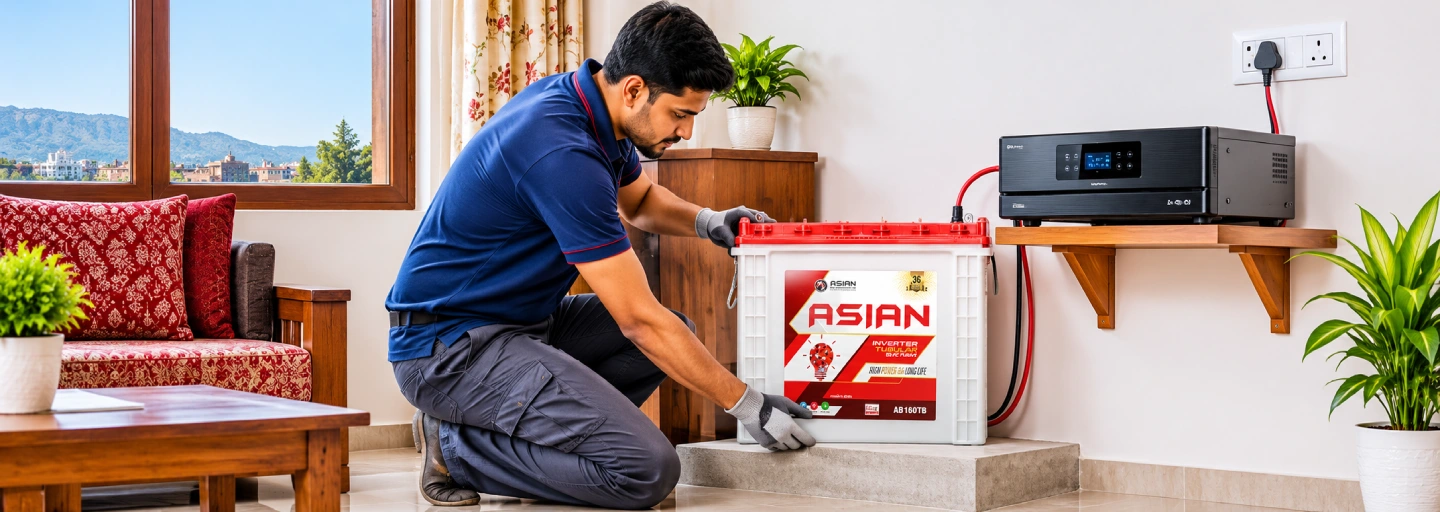
The first step is to select a suitable location. Inverter batteries should be installed in a dry, well-ventilated area where heat can escape easily. Avoid placing them inside closed cabinets, small storage rooms, or spaces with poor airflow. Some lead-acid batteries release hydrogen gas during charging, which can become dangerous if it accumulates in an enclosed space.
Install the battery in a dry, well-ventilated area, preferably away from bedrooms, kitchens, and frequently occupied spaces. This helps minimise exposure to gases released during charging, accidental contact, and potential hazards from acid leakage or electrical faults. Keep the battery away from direct sunlight, rain, moisture, and excessive heat. A shaded unoccupied area with adequate ventilation is a good choice. Make sure the location is easily accessible for inspection, cleaning, and maintenance.
Floor vs. Rack Mounting: What’s Better and Why?
Both floor and rack mounting can work, depending on the battery type, weight, and available space. Floor mounting is common in Nepali homes because it is simple and suitable for heavy inverter batteries. However, the floor must be flat, stable, dry, and strong enough to support the battery’s weight. A protective battery tray or suitable non-conductive base can provide additional protection.
Rack mounting is useful when floor space is limited or when multiple batteries need to be organised. However, the rack must be strong, stable, corrosion-resistant, and designed to carry the combined weight of the batteries. Never place a heavy battery on an ordinary wooden shelf or an unstable surface. Always follow the manufacturer’s mounting instructions.
Cable Sizing and Connection Safety: Avoiding Fire Hazards
Incorrect wiring is one of the most serious installation risks. Inverter batteries carry high DC currents, and undersized cables can overheat, melt their insulation, and create fire hazards. Use cables with the correct thickness and current rating according to the inverter’s capacity, battery voltage, and cable length. Keep cable connections short, secure, and properly insulated. Loose terminals can cause sparking and excessive heat.
Always observe the correct positive and negative polarity. Reversing battery connections can damage the inverter and create safety risks. Avoid using damaged cables, makeshift joints, or household extension wires for battery connections.
Earthing and Fuse Requirements for Inverter Battery Setups in Nepal
Proper electrical protection is essential for a safe inverter installation. A correctly rated DC fuse or circuit breaker should be installed close to the battery’s positive terminal to protect the cable against short circuits.
The inverter’s AC output and metal body should also have appropriate earthing and protective connections according to the manufacturer’s instructions and applicable electrical standards. Remember that earthing and fusing serve different purposes; one cannot replace the other.
Installation should follow applicable electrical safety requirements. A qualified electrician can assess the home’s existing wiring, earthing arrangement, and protective devices before connecting the inverter.
Common Installation Mistakes Seen in Nepali Homes
Some common mistakes include placing batteries in closed cupboards, installing them near cooking areas, using undersized cables, leaving terminals exposed, and skipping protective fuses. Others include connecting multiple batteries incorrectly or placing them directly on damp floors.
Another common mistake is ignoring battery maintenance access. Even a properly installed battery can develop problems if its terminals, ventilation, and condition are not checked regularly.
When to Call a Certified Technician vs. DIY
Basic tasks such as keeping the battery area clean and checking for visible damage can be handled by homeowners. However, electrical connections, cable selection, fuse installation, earthing, and inverter configuration should be handled by a qualified technician.
If you notice unusual heating, a burning smell, sparks, swelling, or battery leakage, stop using the system and seek professional assistance. Never attempt to repair live battery connections yourself.
Post-Installation Checklist Before Switching On Your Inverter
Before switching on your inverter, make sure the installation has been properly inspected. Check that:
- The battery is placed on a stable, dry surface.
- There is sufficient ventilation around the battery.
- Battery terminals are tight and properly insulated.
- Cables have the correct rating and are free from damage.
- Positive and negative connections are correct.
- Appropriate DC fuses or circuit breakers are installed.
- Earthing and AC protection have been checked.
- The inverter settings match the battery specifications.
Have the technician perform the final inspection and commissioning before using the system.
Get Professional Inverter Battery Installation Support from Asian Batteries
An inverter battery should have safe and professional installation. From choosing the right location to ensuring proper wiring, earthing, and electrical protection, every detail matters for your home’s safety.
Asian Batteries provides professional installation support to help homeowners set up reliable inverter battery systems. Whether you are installing a new battery or upgrading your existing backup system, get expert guidance to ensure your setup is safe, efficient, and suitable for your household’s power requirements.
Choose the right battery, install it correctly, and enjoy dependable backup power with greater peace of mind.
More Related Blogs

29 October, 2026
The Major Difference Between a Car Battery and a Truck Battery
22 October, 2026
Home Solar Panel Buying Guide: What to Look for Before You Install
13 October, 2026
How to Refill Water in Inverter Batteries?



Comments 0
Write a Comment