
Home Solar Panel Buying Guide: What to Look for Before You Install
- Sustainable Energy |
- Asian Batteries |
- 22 October, 2026 |
- 9 views |
- 0 comments
Installing solar panels at home is a smart, long-term economic decision that helps you reduce electricity bills and provides alternatives during power cuts. Before making the switch, it is important to understand what to consider when choosing the right solar panel system for your home. You need to consider your electricity consumption, roof space, panel […]
Installing solar panels at home is a smart, long-term economic decision that helps you reduce electricity bills and provides alternatives during power cuts. Before making the switch, it is important to understand what to consider when choosing the right solar panel system for your home. You need to consider your electricity consumption, roof space, panel efficiency, inverter, battery requirements, installation quality, warranty, and overall solar panel cost.
This home solar panel buying guide explains the key things to check before choosing solar panels for home use.
Understand Your Home’s Energy Requirements
The first step is understanding how much electricity your household actually uses. Check your recent electricity bills to see your average monthly consumption. If you plan to run only specific appliances on solar power, list those appliances and calculate their total energy consumption. This will help you determine the right capacity of a solar system for your home. A professional installer can calculate the total power usage of your required appliances and recommend a solar system of appropriate capacity for your home. Lower energy needs mean you can buy a smaller, cheaper solar setup and avoid unnecessary expenses.
Before installing solar panels, try to reduce your home’s electricity use. For example, use energy-efficient appliances and improve insulation to keep your home cool in summer and warm in winter. This will lower your electricity needs, so you may not need a large solar system, helping you save money.
Choose the Right Solar Panel Technology
Modern solar panels are built using high-efficiency monocrystalline N-type silicon. Over the past few years, the solar industry has rapidly transitioned from older “P-type” panels to modern N-type panels that prevent power degradation and maximize energy capture per square meter. The three dominant modern cell technologies are TOPCon, HJT, and IBC/ABC that uses monocrystalline N-type silicon. Half-cut cells and bifacial panels are also modern cell technologies that are structurally enhanced to maximize energy capture even in shade. Modern solar panels are comparatively higher in price but are a good long-term investment.
What else to check;
- Temperature coefficient: A lower temperature coefficient means the panel loses less power as temperatures rise, which is useful in hot climates. Although modern N-type solar panels have lower temperature coefficients, check different models for comparison.
- Warranty: Check the product and performance warranties to understand the manufacturer’s coverage.
- Overall cost: Don’t choose panels based on price alone. Consider their efficiency, expected lifespan, installation costs, long-term performance, and after-sales support to determine their overall value.
Check Your Roof Before Solar Panel Installation
Your roof should have enough space and structural strength for heavy solar panel installation. Ideally, the panels should receive a good amount of sunlight with minimal shading from nearby buildings, trees, walls, or other structures. South-facing roofs with a 30 to 45-degree slope capture the most sunlight. Before installation, check the roof’s orientation, available area, condition, and possible shading throughout the day.
Choose the Right Solar Inverter
Solar panels absorb sunlight and convert it into DC( Direct Current) electricity. But your home appliances use AC(alternating current) electricity. The solar inverter converts AC into DC. When choosing an inverter, consider your solar panel capacity, household electricity needs, and the type of solar system you want.
There are two kinds of systems: on-grid and battery storage. An on-grid system connects to the main electricity supply. You can draw electricity from your main electricity supply when needed and transfer excess solar energy into the main supply. Policy hurdles can limit transferring excess electricity to the main supply. So a battery system is a good option for excess electricity storage.
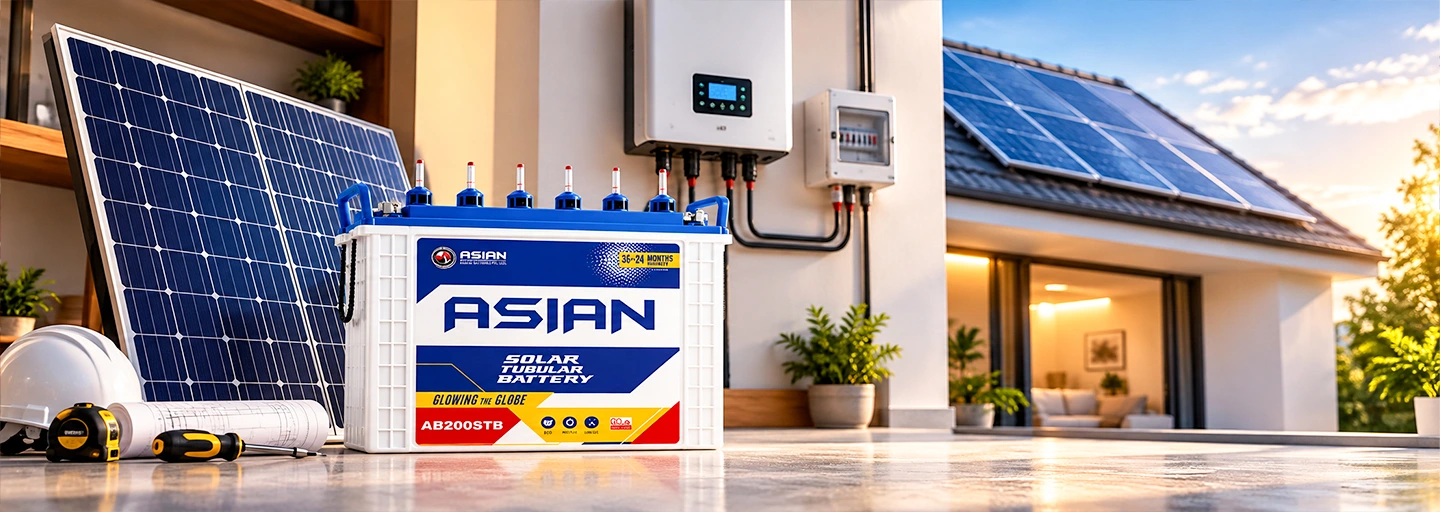
A battery system uses batteries to store excess electricity for later use. A solar battery stores excess electricity generated by your solar panels so you can use it at night, when sunlight is limited, or during power cuts to keep your essential appliances running. A hybrid system combines both.
Conclusion
You need to consider various factors while choosing solar panel for your home. Start with your household electricity requirements, assess your roof, compare solar panel efficiency, and make sure the panels, solar inverter, battery, and other components work together. A well-planned system can offer better performance and long-term value. Take time to compare your options and get a professional assessment before installing solar panels for home use.
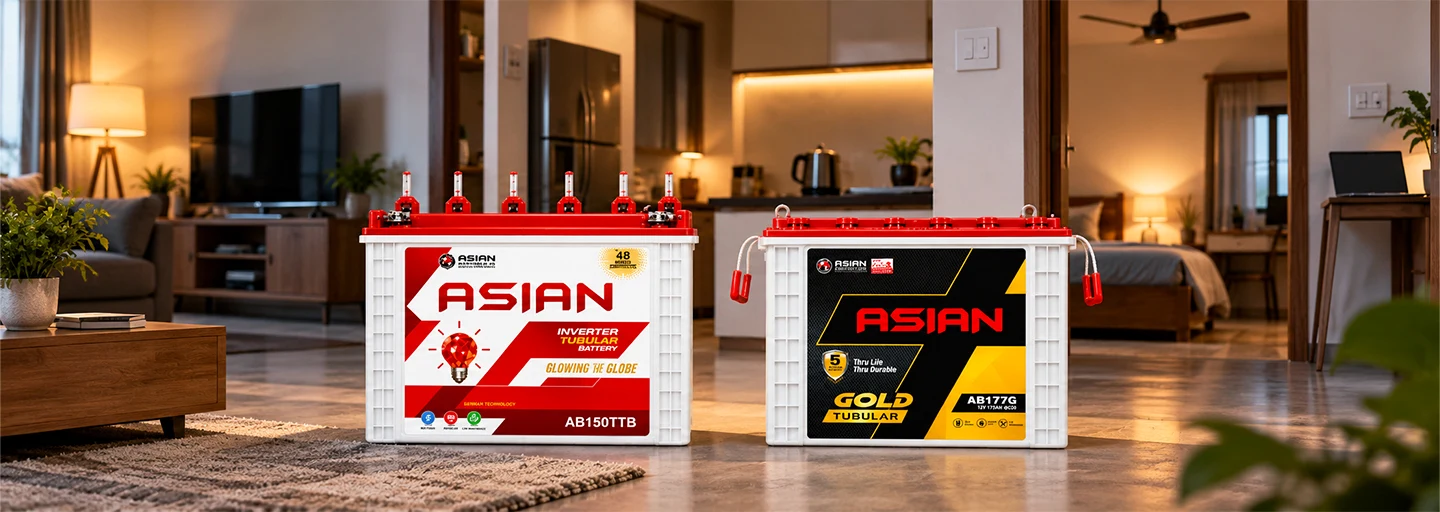
Looking for a reliable solar battery for your home or business? Asian Batteries offer efficient energy storage, low self-discharge, long-lasting deep-cycle performance and dependable backup power. Choose Asian Solar Batteries for a reliable energy storage solution for your solar system. Explore our solar batteries today and power your home or business with confidence.
More Related Blogs
29 October, 2026
The Major Difference Between a Car Battery and a Truck Battery
13 October, 2026
How to Refill Water in Inverter Batteries?
08 October, 2026
Is Tubular Battery Fit for Solar Applications?



Comments 0
Write a Comment