

Solar Battery Maintenance Tips for Homes in Nepal
- Battery Care |
- Asian Batteries |
- 25 December, 2025 |
- 419 views |
- 0 comments
With power cuts increasing in monsoon and unforeseen rainstorm destroying hydropower plants, the need for hard and solar inverter setups is on the rise from Biratnagar to Mustang. Battery users like us and you often forget regular maintenance of the solar battery is as important as setting up the inverter. In order to keep the […]
With power cuts increasing in monsoon and unforeseen rainstorm destroying hydropower plants, the need for hard and solar inverter setups is on the rise from Biratnagar to Mustang. Battery users like us and you often forget regular maintenance of the solar battery is as important as setting up the inverter. In order to keep the lights glowing during these random power cuts, your solar battery needs constant maintenance.
Monsoon dampness soaks into everything including the inverter batteries of solar power. In addition to monsoon dampness, homeowners in terai require additional maintenance. The heat scorches the battery without any mercy degrading solar battery lifespan. While the solar inverter batteries in the hills of Nepal face chilly winds at night throughout the year destroying battery capacity. The battery’s usable life is damaged greatly by weather extremities of Nepal, but good care can stretch tubular solar inverter battery life for 7-10 years easily.
We have written this blog to help you extend your inverter battery life in Nepal by great degree.
Why Nepal Weather Affects Solar Batteries Hard?
Let’s understand why batteries face damage in Nepal before finding out the ways to increase battery life.
The humidity in Nepal revolves around 80% for most months throughout the calendar year. Humidity in Nepal’s air rusts the battery and inverter connections quickly, while the summer heat climbing over 25°C across the country damages the battery further/even more. All the weather-related damages reduce the battery capacity at a rate of around 30% annually in terai cities and hilly areas of Nepal.
In addition to the humidity, the chilling winters decrease the chemical reactions inside the battery to extreme low across Nepal. Especially in Himalaya tourist and trekking regions like Langtang, EBC and ABC batteries face extra damages. The dust affects the battery in dry seasons of spring and summer clogging the vents of these tubular batteries. In winter seasons, the high-altitude climate stops them from receiving sunlight the whole day leading to uneven charge cycles that destroy the recharge capacity. The early wrapping of the battery plate due to uneven charge cycles and weather conditions destroy it.
Store your battery in a cool shady place
Protecting the battery starts from storing it correctly. Keeping or placing your batteries in shaded areas or low sunlight receiving rooms drastically increases battery life. However, storing them only in cool shady rooms is not enough. There are certain steps you’ll need to follow to increase the life of solar inverter batteries in Nepal.
- Keep them on a stand, pedestal or a table 20cm off the ground to allow good air flow and ventilation.
- Do not store the solar battery in roofs with metal roof or transparent roofs that heat the room. Store them in a room with a steady temperature of 20-25°C.
- Do Not place batteries in rooms with fans or rooms where the walls and floor receive dampness. Make sure the room receives natural ventilation to allow hydrogen build up to clear naturally.
Clean regularly and check connection
Cleaning and checking wire connections between battery and inverter is essential to maintain and improve the battery life by 10-15 percent. Clean setups improve the battery life and let it retain the charging cycle for longer periods of time. Follow these are cleaning guides to maintain your battery’s life:
- Clean the dust on your battery with a damp cloth once a week. Make sure the water in the tubular battery is not affected by dampened cloth.
- Green coloured corrosion build up destroys battery power outlets and the heat from these corrosion causes electricity losses too. Hence, you need to clean wire once every two weeks with a mixture of baking soda and little water. Make sure the battery and electric system are turned off while cleaning.
- Check the fuse of your inverter fuse and install new ones timely to prevent damages from short circuits and uneven charges.
- Additionally, clean any moulds with brushes.
Water Levels and Equalize Charges
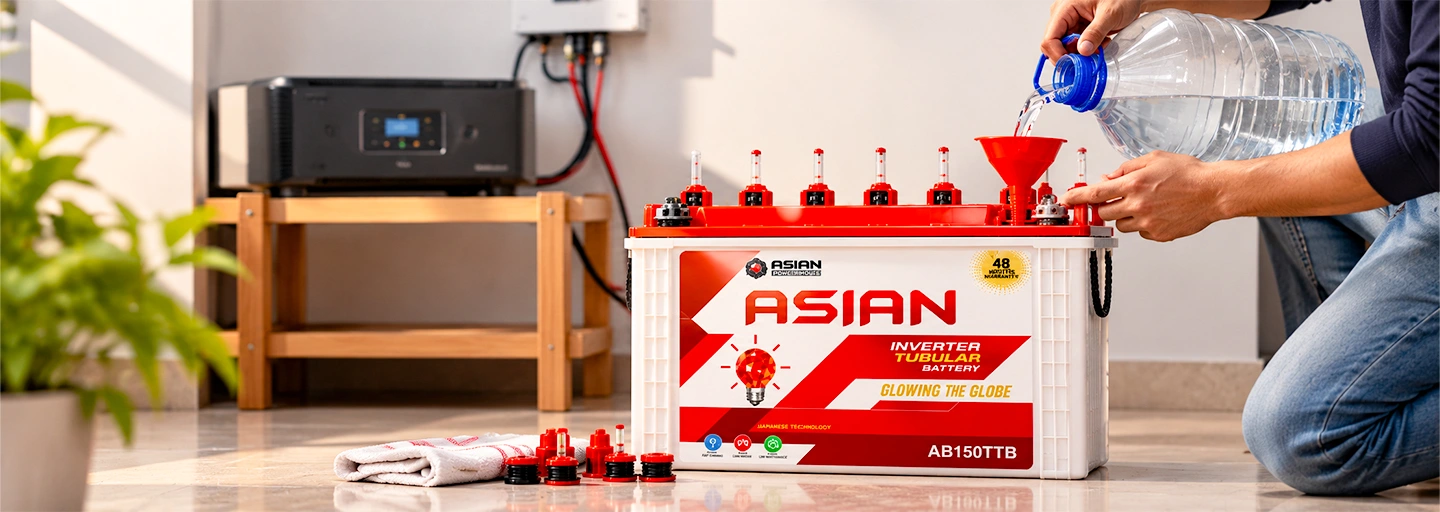
Tubular solar batteries need liquid check and maintenance once every two months. Add the distilled water on the battery right up to plates but if you are unable to do it on your own call a representative of Asian Batteries to top it properly. If you own a battery from a different company, call a servicing expert and make sure the cells are not overfilled during battery servicing. Overfilling the liquid heats up the system and evaporates the battery liquid faster than usual. In addition to liquid maintenance in the battery, make sure to press the equalize button on your inverter once in while to protect the plates of the battery. Equalizing once in four months mixes the acid evenly inside the battery protecting the plates and increasing its life.
Monitor Voltage and Avoid Overloads
Monitoring voltage on your inverter’s tubular battery is super important. Install a smart metered inverter with a clear visible voltage display for daily updates. Follow these vital guidelines to maintain the battery life damages occurring from voltage overloads:
- Check the display regularly to ensure the voltage is around 14.4 volts to prevent damages to battery charging cycles.
- Monitor the home to turn off fans, lights, or extra electronic appliance to prevent overload on your inverter battery.
- Use separate batteries for heavier appliances like oven, water heaters, microwave, fridges, ACs, lights and room fans.
- Do not combine inverter battery systems dedicated for lighting purposes with heavy electronic appliances to maintain voltage and avoid overload.
Most Common Mistakes Made by Nepali Inverter Battery Users.
Most common errors to avoid for elongating life of your inverter battery is to avoid common mistakes made by other householders. Some of these errors to strictly avoid are:
- Refilling water timely in the battery.
- Using ACs and heavy electronic appliance overloading system and battery capacity.
- Using a battery and inverter to power the whole house destroys battery life quickly.
- Ignoring weekly cleaning of dust in the battery and inverter system steals vital energy power.
Pro Tips
Use the batteries from Asian Batteries that provide free service on tubular inverter batteries in Nepal and lead acid batteries. The free servicing and timely maintenance from our authorised shops and company representatives ensure the battery cycle is properly maintained and battery lasts 7-10 years.
More Related Blogs
13 October, 2026
How to Refill Water in Inverter Batteries?
08 October, 2026
Is Tubular Battery Fit for Solar Applications?

24 September, 2026
2nd Annual General Meeting (AGM) Notice



Comments 0
Write a Comment